
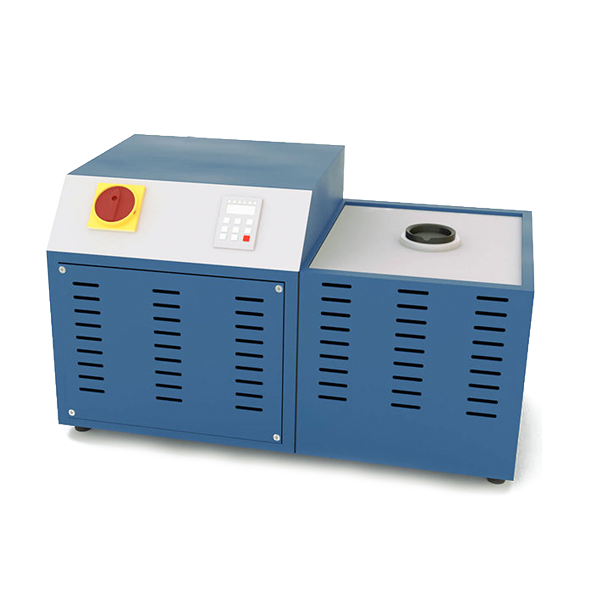
УИ-1П Transistor Oven
- Capacity by metal
- gold 1–2 kg; copper up to 0,55 kg and aluminum up to 0,15 kg (calculated)
- Estimated power consumption
- 7,11 kW
- Operating frequency
- 30–80 kHz
- Supply voltage
- 220 В
- Drainage mechanism
- without tilting
Transistor melting furnaces are selected by metal and by the mass of a single melt. The catalog has three categories: steel and cast iron 3–100 kg; copper 10–200 kg, copper alloys, and gold; aluminum and aluminum alloys. For aluminum, the loads are 3–66 kg; for alloys, the working mass is specified by grade. The small models УИ-1П…УИ-10П are included in the selection for copper and aluminum; the load is determined by the chosen crucible. For gold, the ranges from 1–2 to 8–10 kg are retained. УИ-8П and УИ-10П are also available for steel with magnesite crucibles for 3 and 5 kg. The line includes 14 models, and the configuration of each is calculated for the selected metal.
An engineer will select a model for your metal and send a cost estimate.
One model can belong to several categories. Each subsection shows the load for the selected metal, and the full card contains the parameters and configuration options.
14 models of transistor furnaces from a proven partner factory — a smaller load than thyristor furnaces, compactness, and low power consumption. Select a model by melt mass and power.
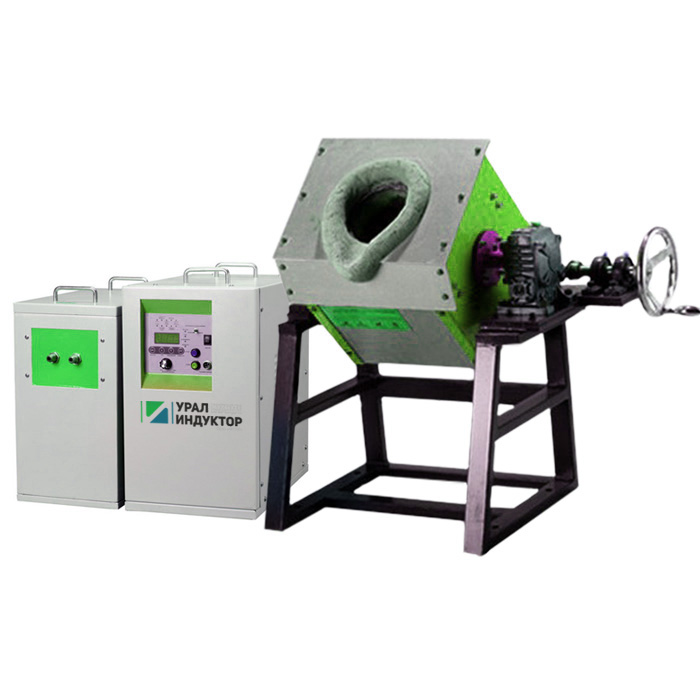
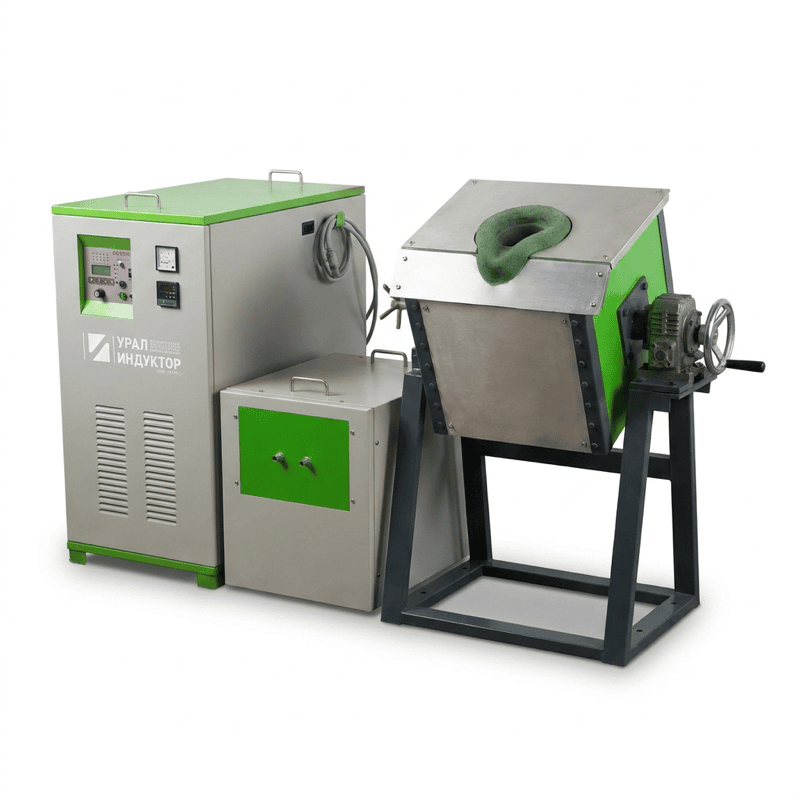
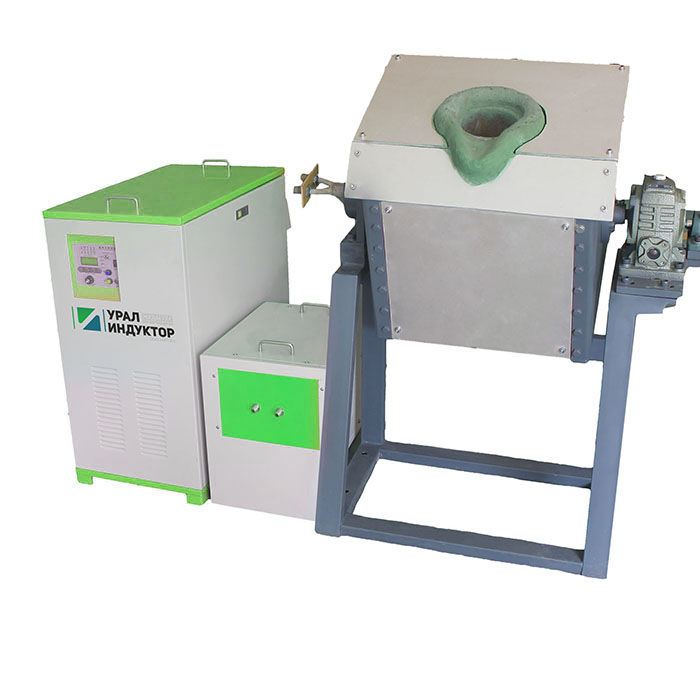
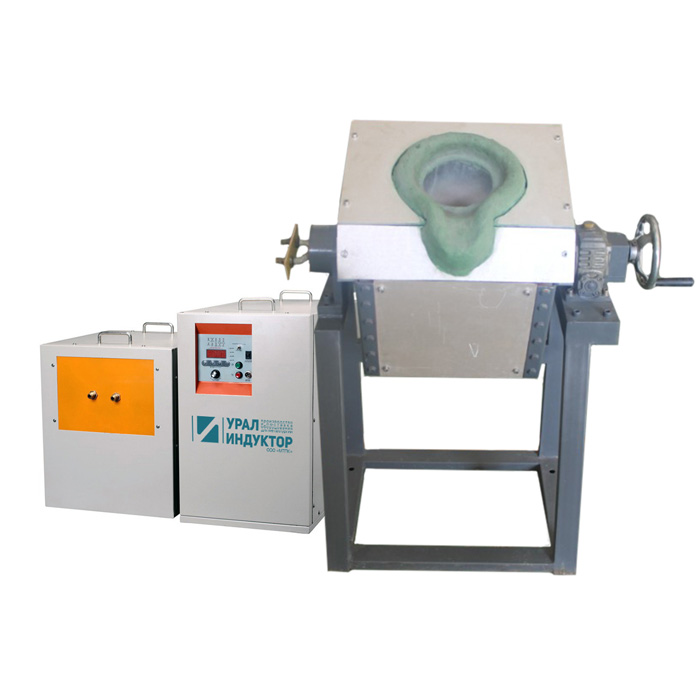
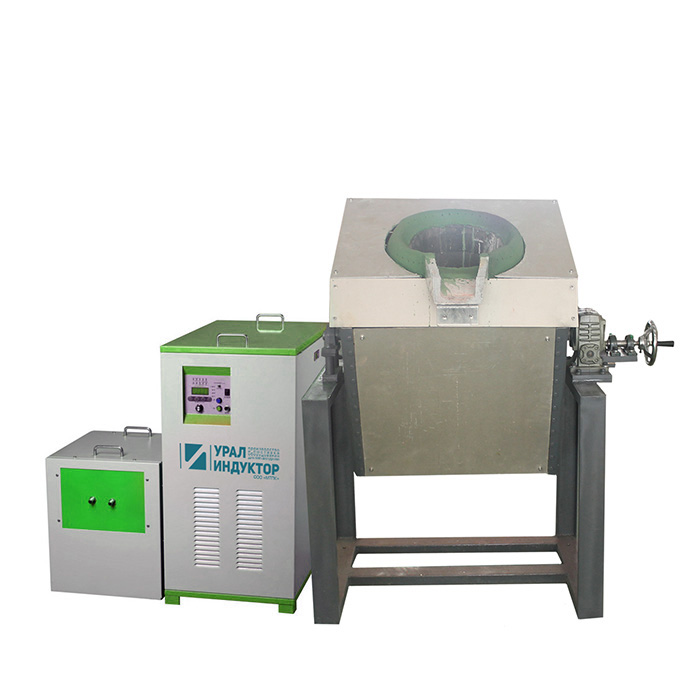
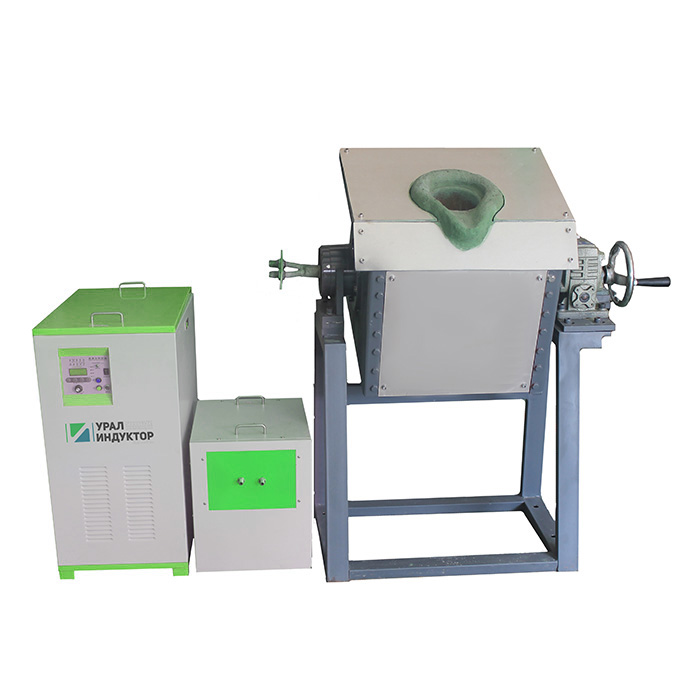
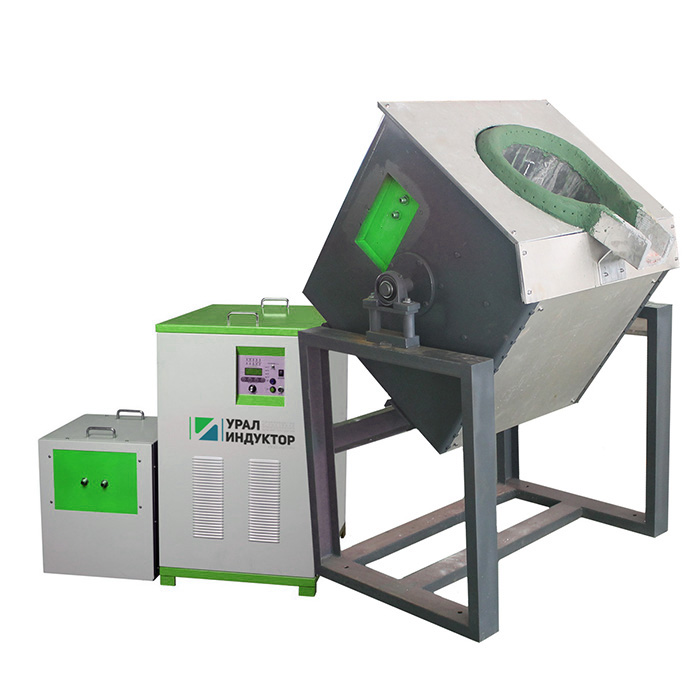
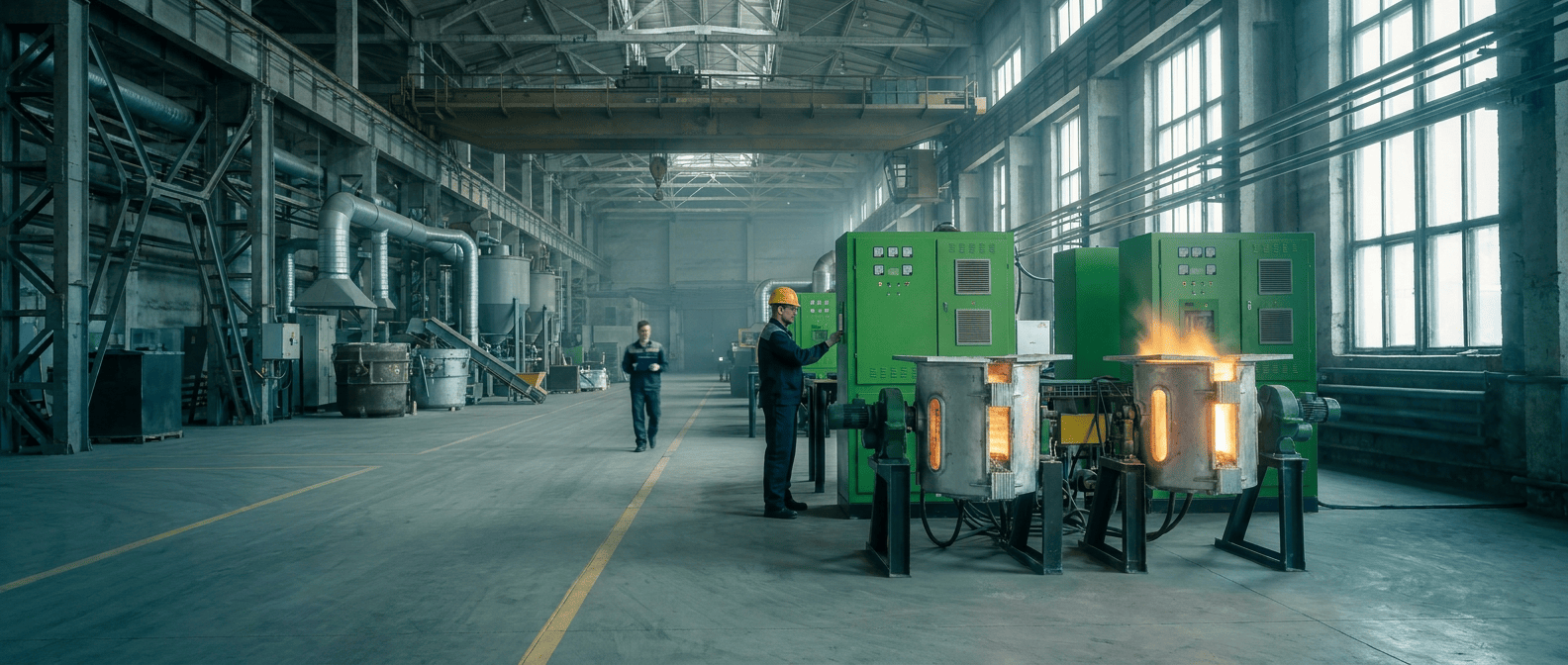
| Model | Capacity by metal | Calculated power consumption, kW | Food, in | Frequency, kHz | Current consumption, A |
|---|---|---|---|---|---|
| УИ-1П | gold 1–2 kg; copper up to 0,55 kg and aluminum up to 0,15 kg (calculated) | 7,11 | 220 | 30–80 | 34 |
| УИ-2П | gold 3–4 kg; copper up to 1,10 kg and aluminum up to 0,30 kg (calculated) | 15,96 | 380 | 30–80 | 26 |
| УИ-3П | gold 4–5 kg; copper up to 1,95 kg and aluminum up to 0,55 kg (calculated) | 21,48 | 380 | 30–80 | 35 |
| УИ-5П | gold 5–6 kg; copper up to 2,50 kg and aluminum up to 0,75 kg (calculated) | 26,39 | 380 | 30–80 | 43 |
| УИ-8П | gold 6–8 kg; copper up to 5,90 kg and aluminum up to 1,75 kg (calculated); steel 3 kg with a magnesite crucible | 31,91 | 380 | 30–80 | 52 |
| УИ-10П | gold 8–10 kg; copper up to 6,80 kg and aluminum up to 2,00 kg (calculated); steel 5 kg with a magnesite crucible | 42,96 | 380 | 30–80 | 70 |
| УИ-15П | steel and cast iron 3 kg; copper 10 kg; aluminum 3 kg | 20,01 | 380 | 1–20 | 32 |
| УИ-25П | steel and cast iron 5 kg; copper 20 kg; aluminum 6 kg | 25,64 | 380 | 1–20 | 41 |
| УИ-35П | steel and cast iron 10 kg; copper 30 kg; aluminum 10 kg | 32,51 | 380 | 1–20 | 52 |
| УИ-45П | steel and cast iron 18 kg; copper 50 kg; aluminum 16 kg | 42,52 | 380 | 1–20 | 68 |
| УИ-70П | steel and cast iron 25 kg; copper 100 kg; aluminum 33 kg | 65,65 | 380 | 1–20 | 105 |
| УИ-90П | steel and cast iron 40 kg; copper 120 kg; aluminum 40 kg | 87,54 | 380 | 1–20 | 140 |
| УИ-110П | steel and cast iron 50 kg; copper 150 kg; aluminum 50 kg | 112,55 | 380 | 1–20 | 180 |
| УИ-160П | steel and cast iron 100 kg; copper 200 kg; aluminum 66 kg | 150,06 | 380 | 1–20 | 240 |
For the УИ-1П…УИ-10П series, the gold load is given as a range. The crucible is selected by usable volume, alloy composition, temperature, and pouring method. The furnace load and the nominal designation of the crucible size do not replace each other.
For the УИ-15П…УИ-160П, the catalog lists silicon carbide crucibles for copper and magnesite crucibles based on magnesium oxide (MgO) for steel. For aluminum and aluminum alloys, the crucible material and dimensions are specified separately according to the alloy and the fluxes used. For cast iron, crucible compatibility is checked by composition and mode.
| Model | Silicon carbide, mm | MgO crucible, mm |
|---|---|---|
| УИ-15П | 142(110) × 90 × 180 | 91(65) × 180(165) |
| УИ-25П | 222(180) × 153 × 295 | 119(95) × 140(115) |
| УИ-35П | 235(195) × 170 × 285 | 130(106) × 225(200) |
| УИ-45П | 295(250) × 170 × 365 | 150(120) × 300(285) |
| УИ-70П | 340(280) × 200 × 365 | 175(140) × 320(300) |
| УИ-90П | 340(285) × 170 × 390 | Per the version drawing |
| УИ-110П | 370(310) × 150 × 452 | Per the version drawing |
| УИ-160П | 400(345) × 190 × 510 | 250(205) × 515(475) |
The calculation up to the upper edge was made for a cylindrical cavity: V = πd²h/4, m = ρV. In the notation D(d) × H(h), the numbers in parentheses are taken as the inner diameter and depth. The density of liquid steel is taken as 7,0 kg/L. Taper, fillets and thermal expansion of the crucible are not taken into account.
| Model | d × h, mm adopted | Volume to the rim, L | Steel to the rim, kg theoretical | Nominal for steel, kg |
|---|---|---|---|---|
| УИ-15П | 65 × 165 | 0,548 | ≈ 3,8 | 3 |
| УИ-25П | 95 × 115 | 0,815 | ≈ 5,7 | 5 |
| УИ-35П | 106 × 200 | 1,765 | ≈ 12,4 | 10 |
| УИ-45П | 120 × 285 | 3,223 | ≈ 22,6 | 18 |
| УИ-70П | 140 × 300 | 4,618 | ≈ 32,3 | 25 |
| УИ-90П | — | — | — | 40 |
| УИ-110П | — | — | — | 50 |
| УИ-160П | 205 × 475 | 15,678 | ≈ 109,7 | 100 |
Capacity to the brim is a theoretical estimate under the stated assumptions. The working melt level is set below the rim; the nominal furnace load is given separately.
Calculated values are given for six magnesite crucibles. For the УИ-90П and УИ-110П, the dimensions of the working cavity are specified from the drawing of the version; the previous geometry does not confirm the current working load.
Dimensions are given in catalog format, in millimeters, preserving the order of the numbers and brackets. The seating dimensions for crucible replacement are checked against the drawing of the agreed melting unit.
The table is for primary selection. For all УИ-1П...УИ-160П models, the standard is one transistor transducer and one consistent melting point. The second node is supplied only as an additional execution for a technical task. Inductor voltage, unit matching, cooling, housing, lining and actual performance are confirmed by calculation and specification.
For small transistor furnaces, the specific flow rate cannot be correctly transferred from the tonnage furnaces: a large proportion of the heating of the crucible and losses per small load. Therefore, the consumption is considered to be for metal, crucible and a series of floats.
The replaceable performance of the site is calculated according to the full stroke of small melting, and not by dividing the power by mass. The stroke includes loading, melting, metallurgical operations, overheating, draining and preparing the next melting.
If two transistor models have the same boot, but different power, a more powerful one is not always more profitable. It requires more connected power and cooling system performance, but can reduce the electrical part of the cycle. The choice is made according to the full stroke, the schedule of bottling and the cost of infrastructure.
For small loading, you need a stock of crucible volume, which provides a safe level of the bath at a given furnace charge. Constant work with a significantly underloaded crucible is also undesirable: the engineer checks the electrical alignment, the depth of the bath, the mixing and the allowable technological residue.
Transistor furnace is chosen not only by weight of metal. The operating frequency affects the depth of current penetration, the nature of the electrodynamic stirring and the coordination of the converter with the inductor. The 30–80 kHz line is designed for the smallest melting points, and the 1–20 kHz line is designed for larger downloads.
For the УИ-15П…УИ-160П, separate loads are given for steel and cast iron, and for copper and aluminum. For the smaller series УИ-1П…УИ-10П, gold load ranges and the selection of crucibles for copper and aluminum are given. For the УИ-8П and УИ-10П, 3 and 5 kg of steel with magnesite crucibles are confirmed separately; these values do not apply to cast iron. Brass, bronze, silumin, and other alloys are selected by grade; the load of one metal is not automatically carried over to another.
For a compact transistor furnace, UralInduktor can select and supply replacement and spare crucibles, as well as insulation materials. The material and size are chosen according to the exact alloy, temperature, fluxes, frequency, and inductor; incompatible groups need separate crucibles. The exact designation is fixed by the specification, and the rammed-lining assembly, if provided for by the project, is calculated separately.
The table gives the calculated power consumption for a preliminary assessment of the electrical supply. It is not the rated output power of the converter. The cable, protection, and allocated power of the site are selected according to the equipment passport, the connection conditions, and the load of auxiliary systems.
For transistor furnaces, flow, pressure, and cooling capacity are calculated by converter, inductor, track length, and temperature. A typical compact version is an industrial chiller of the same manufacturer, indicated by a separate position. Existing cooling of the customer is allowed after checking the temperature, flow, pressure, quality of the coolant, cooling capacity and simultaneous load.
The standard configuration includes one transistor transducer and one consistent melting point. The second node, chiller, extractor, foundation, installation and commissioning are indicated by separate positions, unless explicitly included in the specification. PLC and touch screen are used for recipes, archive and integration with ICS TP and also relate to consistent options.
PLCs and touchscreens are used to store recipes, archive parameters and integrate with ICS; without direct specification, they are not included as standard. Lining control, weighing, pyrometry, vibration tamping and cooling reserve are also issued as separate options.
Before delivery, the transistor installation is checked according to the agreed program. The customer or his representative may participate in the acceptance in person or by video link; the place, volume of load and criteria are fixed in the offer or contract.
Popular transistor models are in stock. Shipments from the partner factory arrive regularly, up to one container per month; if the required model or configuration is not available, the delivery time is from 45 calendar days. The exact readiness date is fixed in the commercial proposal.
Transistor units are officially supplied from one Chinese partner plant, with which Gross Metal Engineering LLP has been working for 13 for years; importation is accompanied by the necessary permits. For performances with a touch panel menu Russified, operational documentation is provided in Russian. Spare parts warehouse, diagnostics and repair, development of inducers and automation, installation and commissioning are available in Kazakhstan.
We will select a transistor unit free of charge based on the metal, the capacity, the shift output, the available power, and the site layout. We will prepare a preliminary calculation of the furnace, cooling, and main utilities together with a commercial proposal. The preparation time is from 1 business day; for a non-standard project, we determine it after analyzing the technical specification.
The cost depends on the power, number of units, drive, cooling, automation and the composition of the work and is indicated only in the current commercial offer. For running warehouse positions, prepayment from 10 % is possible, for large and individual projects - from 30 %. The order of payment and fixation of the price is agreed individually. Equipment and services of "Gross Metal Engineering" LLP are supplied with VAT at the current rate; leasing up to 5 years is available through partner companies.
We diagnose and repair transistor units from various manufacturers, and develop inductors and automation for non-standard processes. Based on the results, we issue a written report with the causes of the fault, the sequence of work, and a list of components. The audit can be ordered separately, without mandatory repair; a warranty is provided for the work performed under the contract.
After obtaining the initial data, the engineer offers a model or several comparable options, shows the supply limits and separately calculates the installation, commissioning and infrastructure.
The actual mass and dimensions of the equipment are reported on request for the selected execution.
After the conclusion of the contract, we provide a passport of agreed execution and a task for the foundation and construction training. The final set of passports and operational documentation is transmitted with the equipment. The task of preparing the site does not replace the working construction documentation: its development is included in the contract separately.
Choose one of the three sections by metal and compare the models by the mass of a single melt. The same full model card opens from different subsections: it contains all specifications, crucible options, cooling, configuration, and delivery terms. The small series УИ-1П…УИ-10П is shown separately from the УИ-15П…УИ-160П series, because the frequencies, melting units, and the basis for stating the loads differ.
The mass of the melt is determined by the usable volume and material of the crucible, the properties of the metal, and the chosen version of the melting unit. Therefore, the loads for steel, copper, aluminum, and gold are given separately. Brass, bronze, and silumin are selected by alloy grade; the figure for a pure metal is not automatically carried over to an alloy.
The calculation requires the mass of usable metal per tap, the full melting cycle and the available working time. The cycle includes loading, heating, composition adjustment, holding, pouring and preparation of the next melting. Melting loss, slag removal and the process residue are taken into account separately. The load mass in kilograms does not mean the same productivity in kilograms per hour.
Yes, after checking the temperature, flow rate and pressure of the coolant, its quality and the available cooling capacity. The simultaneous load of the converter and the melting unit, the length of the lines and the operation of interlocks are checked. The presence of a pump or chiller on site does not by itself confirm compatibility with the furnace.
The proposal lists separately the converter, melting unit, crucible, pouring method, cooling, controls, documentation and on-site work. The standard scheme contains one converter and one agreed melting unit. A second unit, a chiller, extraction, installation and commissioning are included in the supply only according to an agreed specification.
An engineer will contact you, clarify the task and suggest a solution for your production process.
A manufacturer with a complete engineering cycle: equipment selection, commissioning and service within one company.
We manufacture induction melting furnaces and heaters, shot blasting equipment, cooling systems and steel casting ladles, taking responsibility as the manufacturer.
Selection, design, delivery, installation, commissioning, training and service within one company.
We address most metallurgical and foundry production requirements, from an individual furnace to a turnkey production area.
Operating since 2014. Completed projects of varying complexity and engineers with practical commissioning experience.
Some equipment is available from stock, reducing lead times for urgent requirements.
18-month warranty on our own manufactured equipment. Ongoing post-warranty maintenance, spare parts and service.
Send us another company's proposal — we will compare the equipment list, configuration and cost.