UralInduktor · metallurgical equipment manufacturing and supply
We will call back within 10 minutes
Sandblasting equipment

Sandblasting machines for industrial cleaning of surfaces

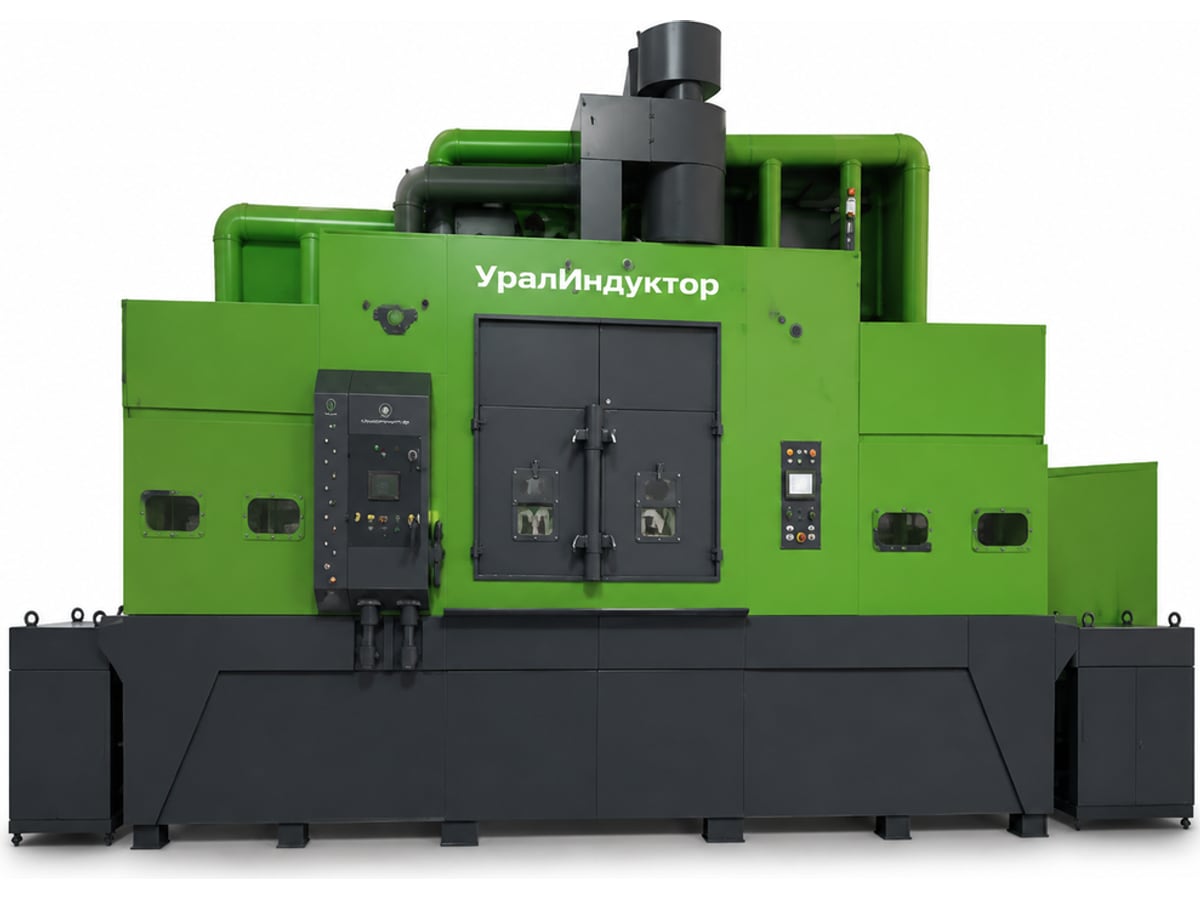
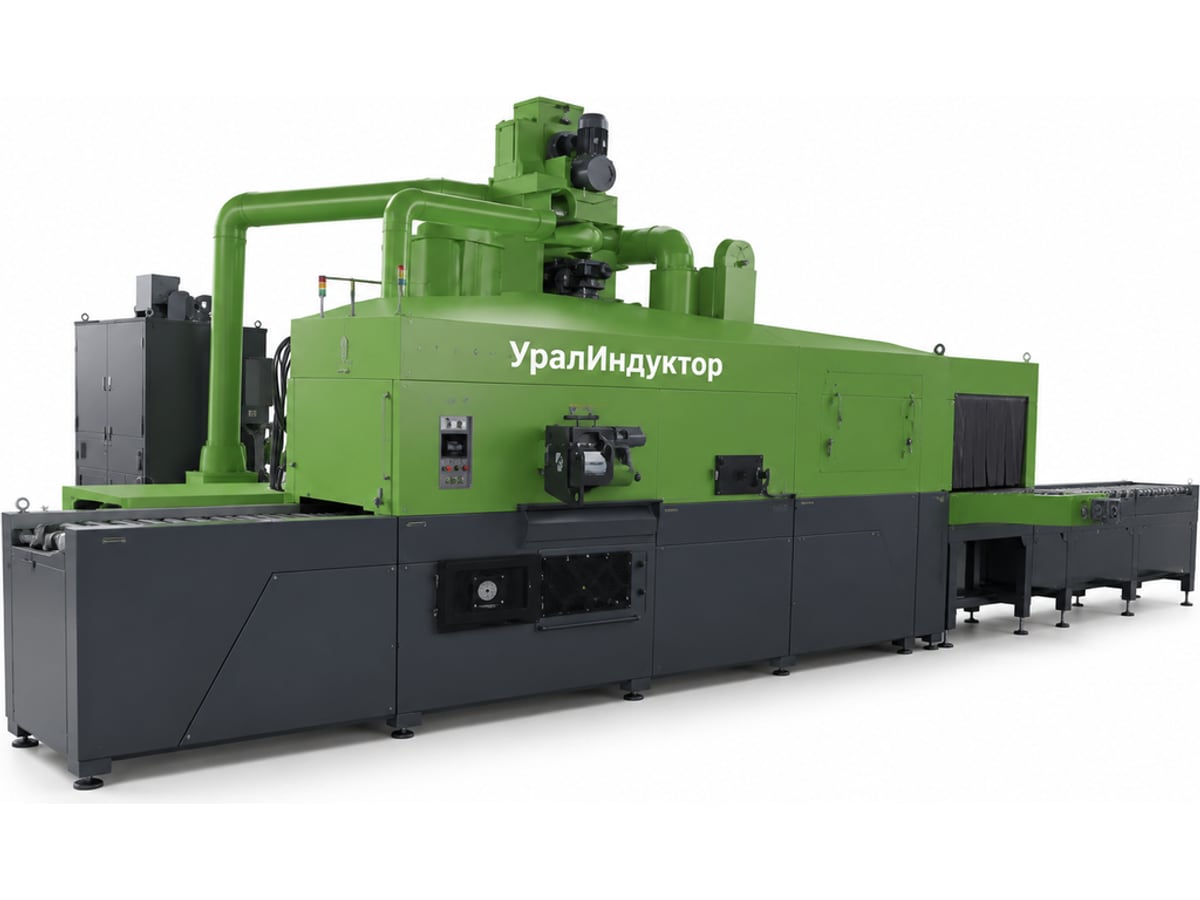
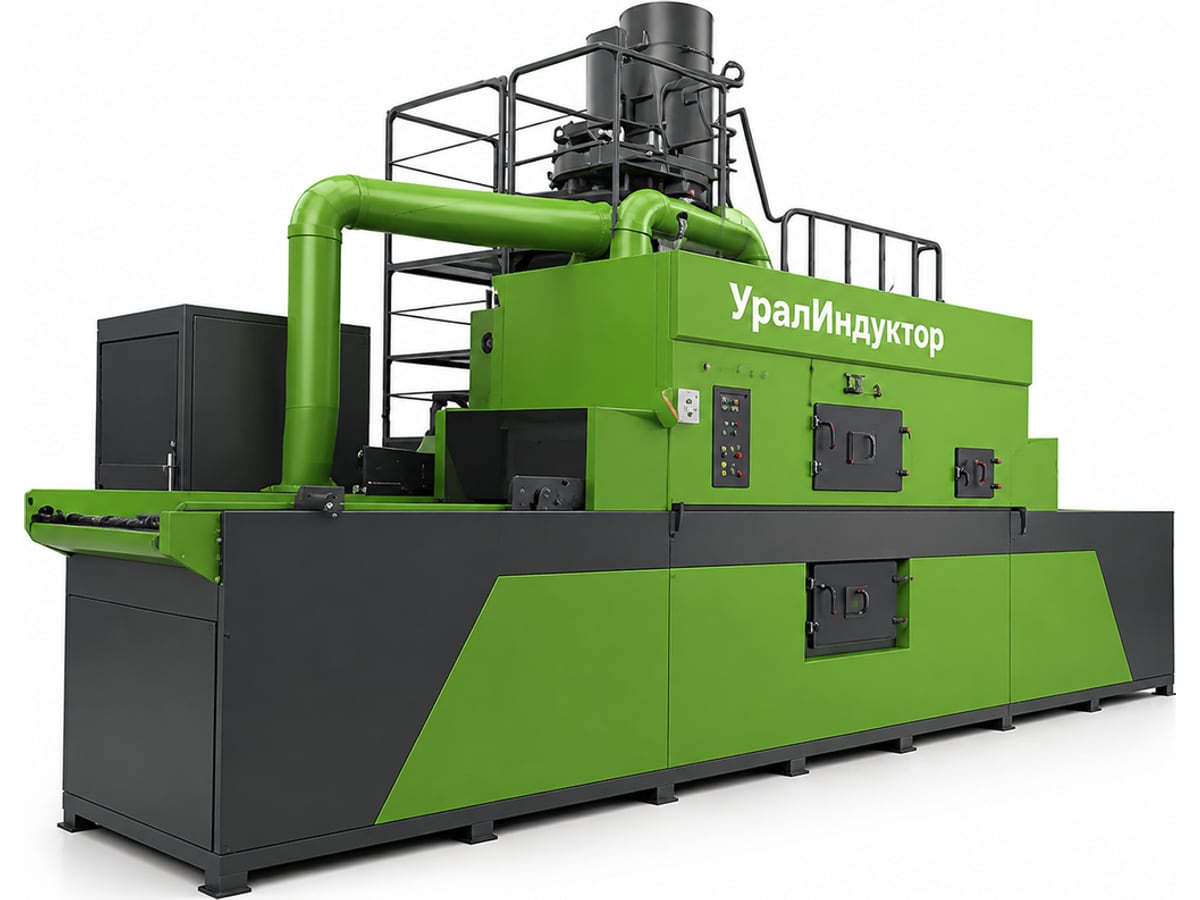
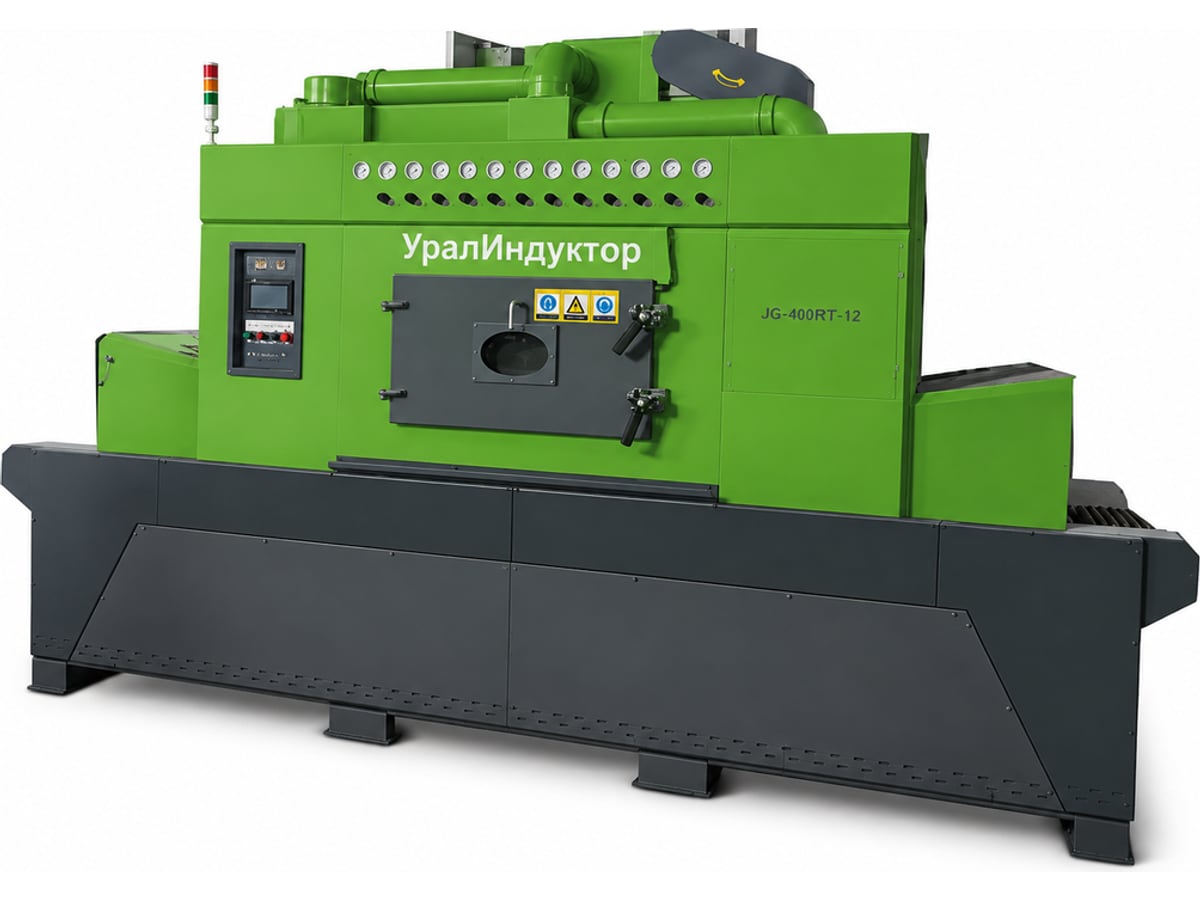
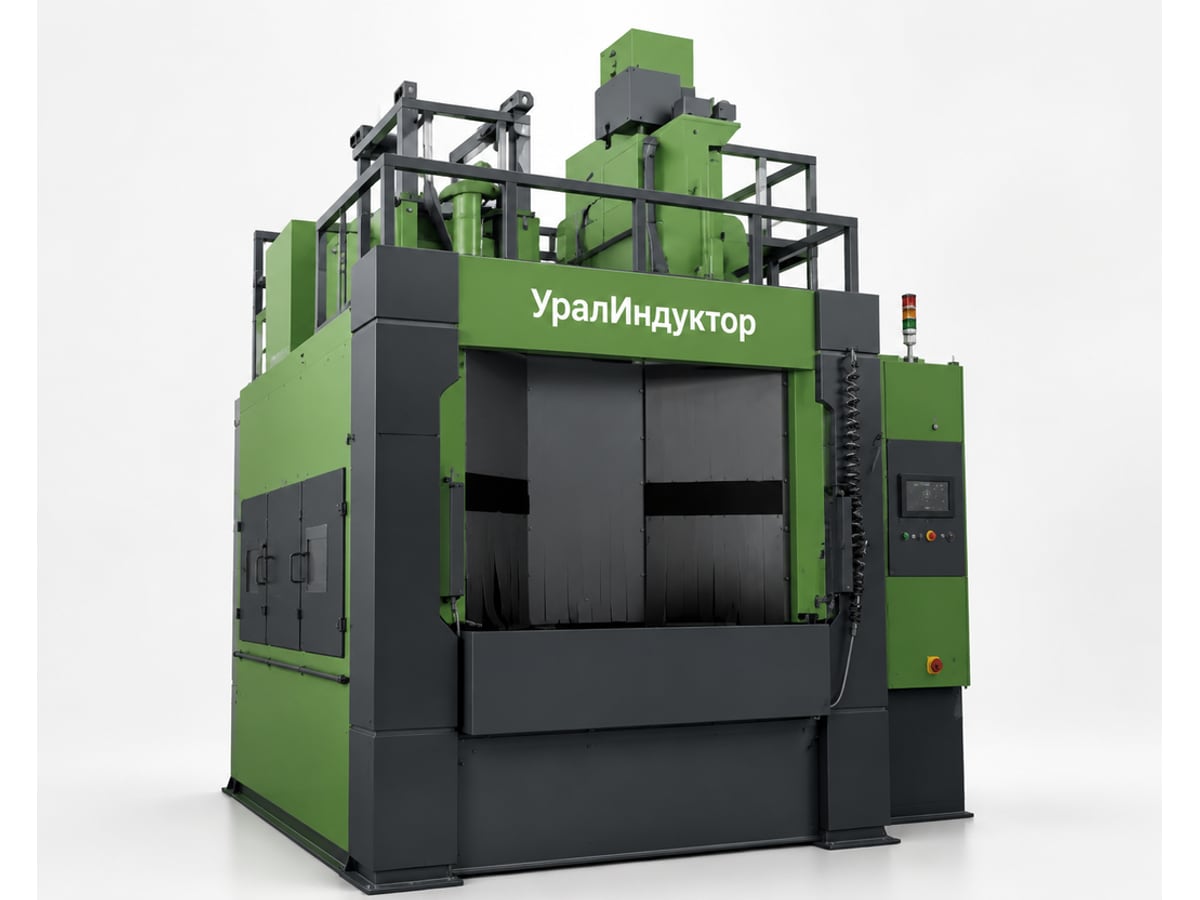
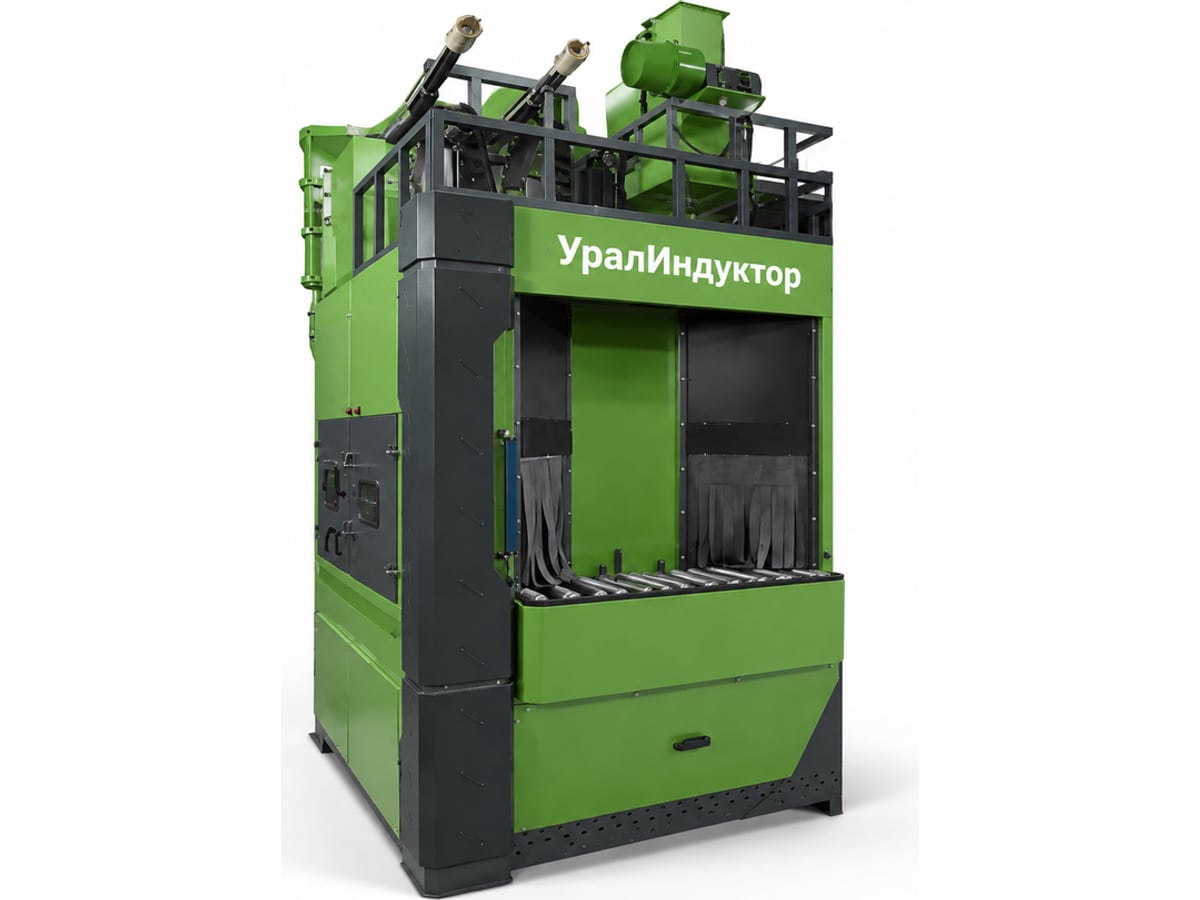
Pass conveyor, pressure with a rotary table, bogies and hand cabins - a complete line for cleaning castings, blanks and finished products from scale, rust and old coatings. Closed turn abrasive, PLC control, industrial dust filtration.

We will call back within 10 minutes

Quick estimate and consultation

An engineer will select a model for your metal and send a cost estimate.

model range
13
types of installations - from the hand cabin to the passing line
nozzles
up to 28
Swivel and swing in one chamber
abrasive
Enclosed
abrasive turnover - dust recovery and cleaning
warranty
12 months
warranty · delivery across Kazakhstan and the CIS
Technology

What is sandblasting

Sandblasting is the cleaning and preparation of the surface with a directed abrasive jet. Particles under pressure hit the parts and remove scale, rust, old paint and pollution, giving the surface a uniform roughness under painting, galvanic or glue.

In industrial plants abrasive after impact collected, cleaned of dust and large inclusions and returned to work closed turn reduces material consumption. The dust is trapped by the filter block, the air in the shop remains clean.

  • Cleaning of castings and blanks
    Removal of molding crust, scale and rust from casting, forging, rolled steel and welded structures.
  • Closed turn abrasive
    The net, elevator and separator return a suitable abrasive to the bunker - the minimum consumption of material.
  • Uniform roughness
    Stable surface preparation for painting, powder, galvanic and gluing - adhesion coating above.
  • Clean air in the shop
    Pulse filtration and dust extraction capture dust - for labor protection and Rosprirodnadzor without comments.
Under your task

We select the configuration for the part and production program

4 typical cleaning scenarios and the equipment that closes them.

24/7
Flow of serial parts

Serial stream cleaning — through installations

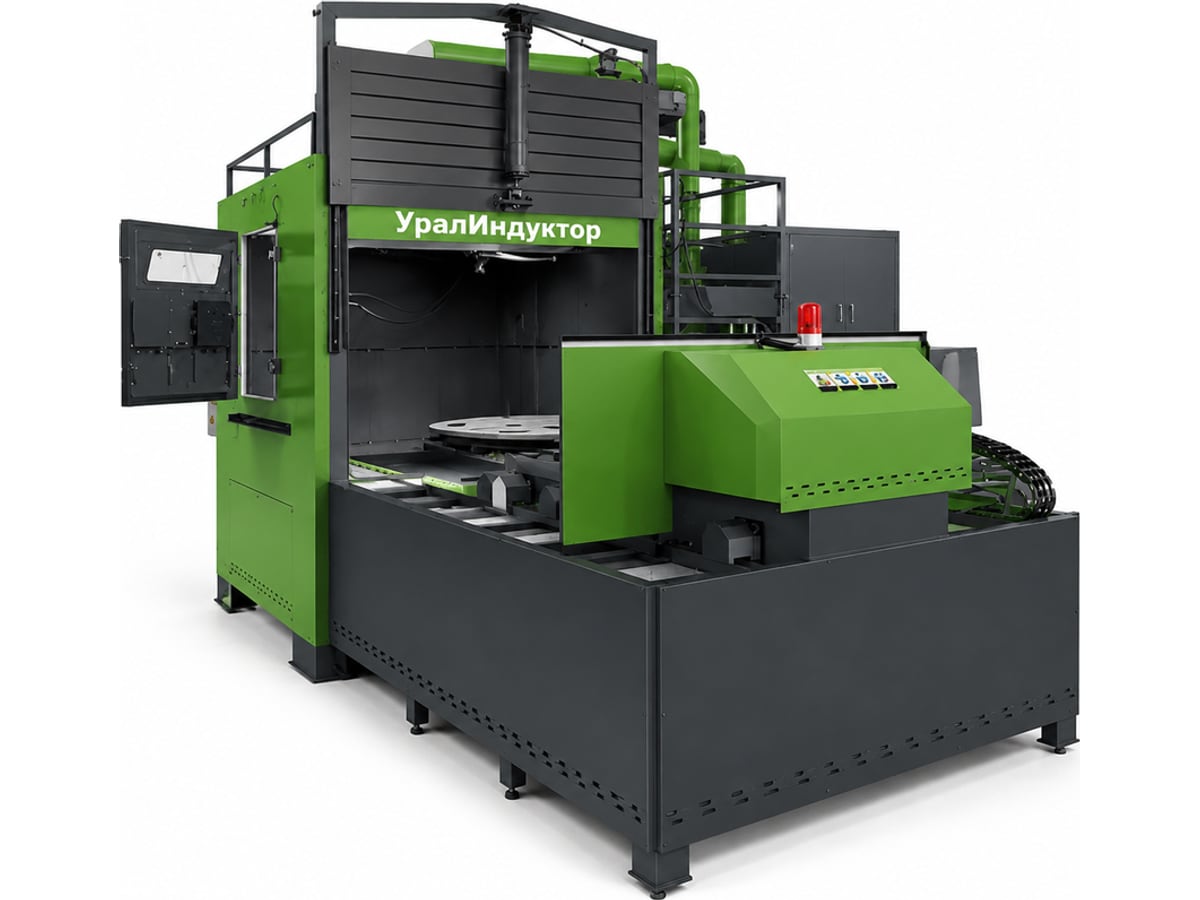
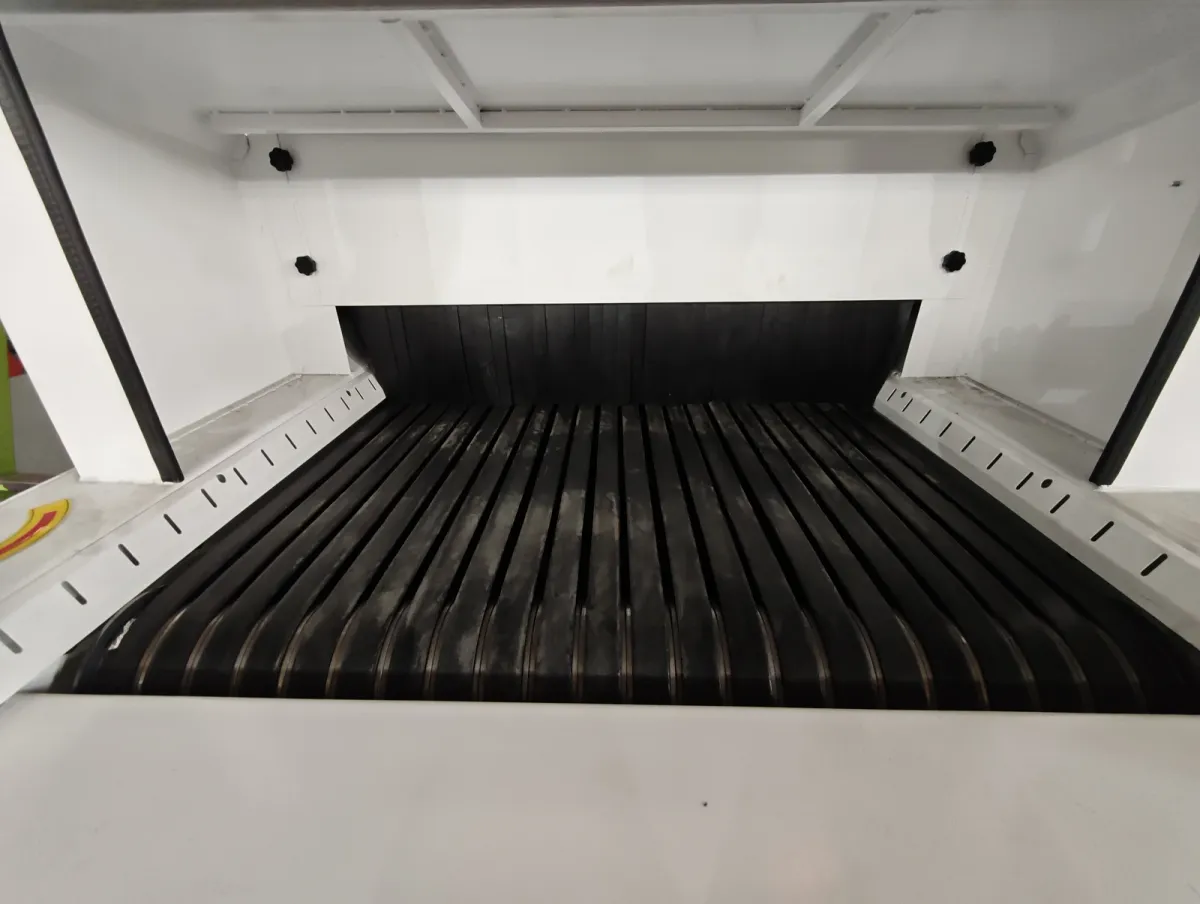
A crawler, tape or roller conveyor conducts parts through a chamber with a group of nozzles. Circular and swinging processing, PLC control, continuous cycle.

Suitable flat and profile rolled, castings, length, serial blanks
360°
processing from all sides

Complex geometry - pressure with a rotary table

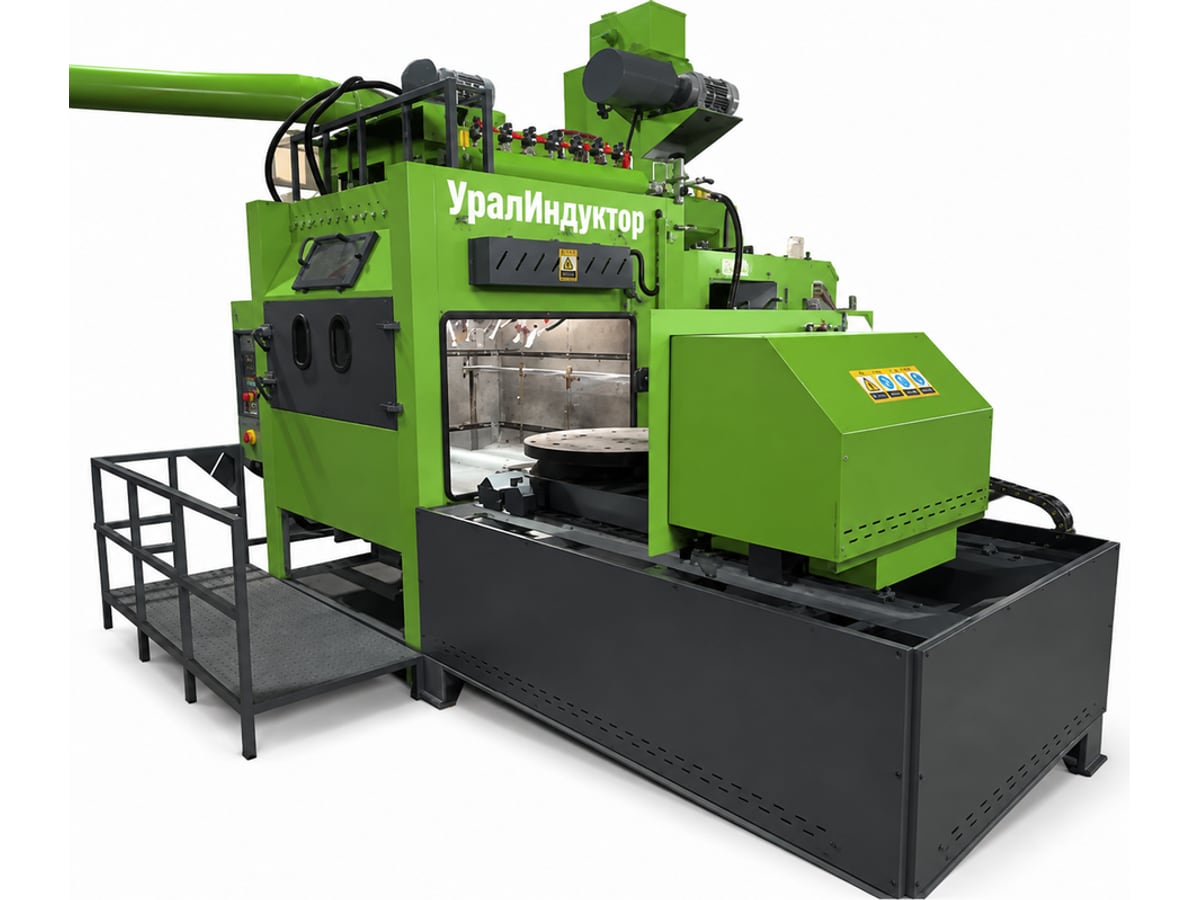
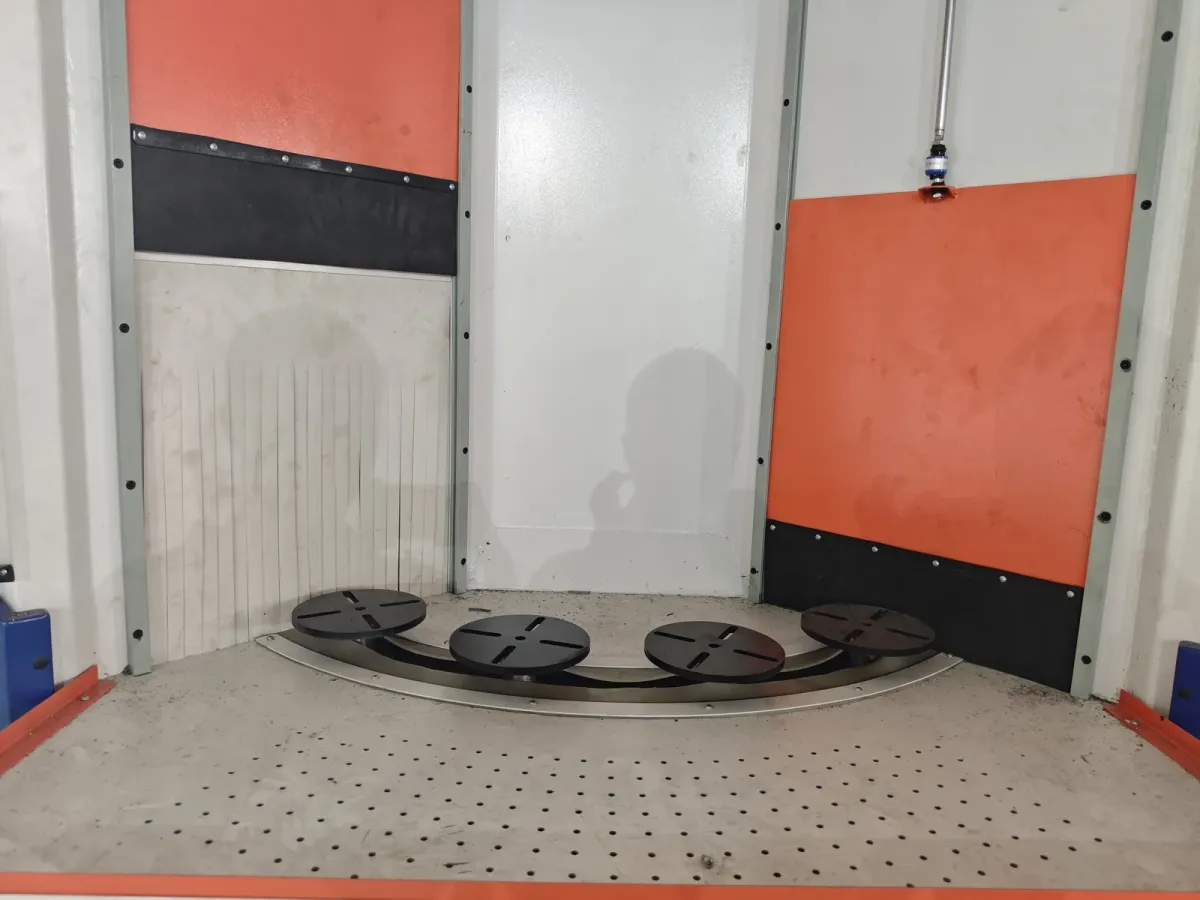
The detail rotates on the rotary table, the nozzles swing and move - the jet reaches all sides. Index and single table schemes for small and medium parties.

Suitable body parts, shaped casting, products of complex shape
up to 1000 kg
mass of details on the table

Heavy and large parts - trolley installations

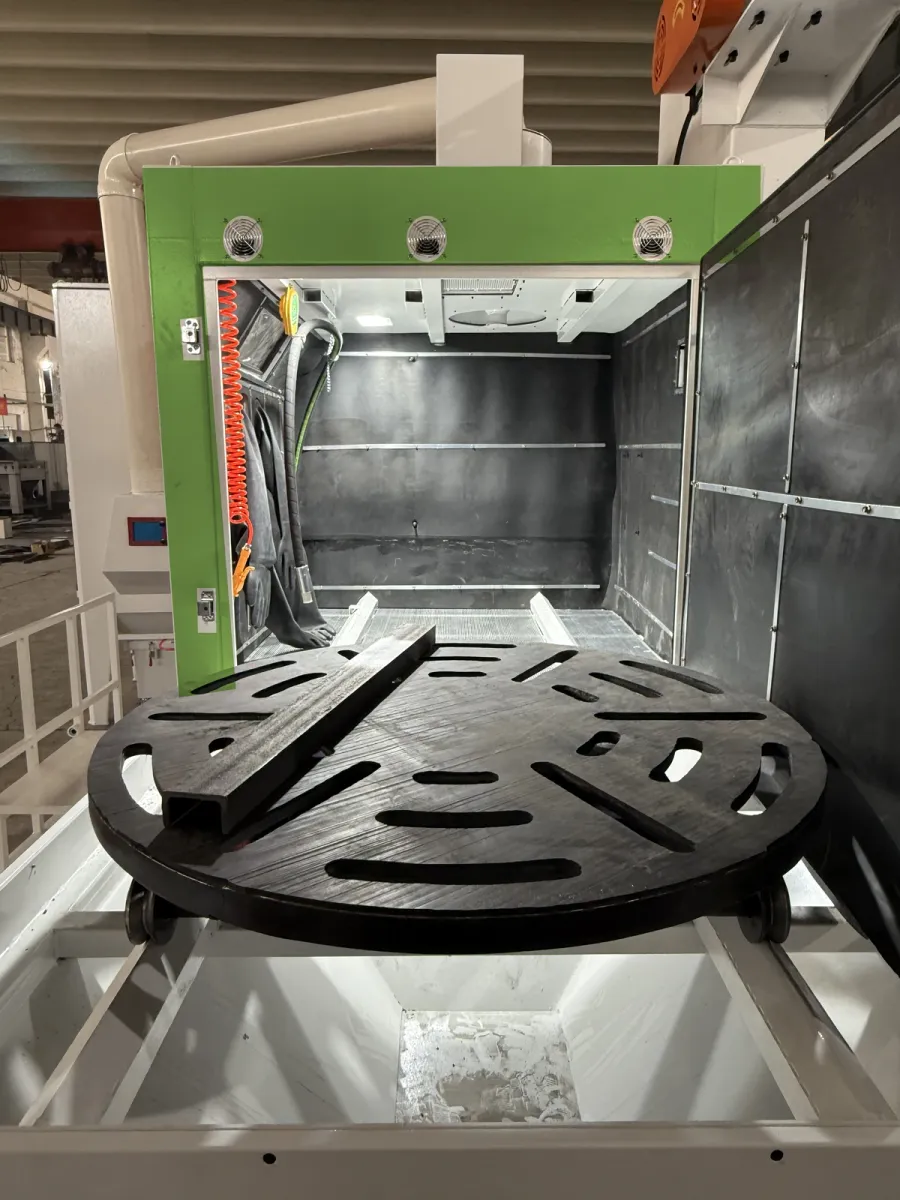
The detail is placed on the turning table of the cart, the cart comes into the chamber. Automatic and manual nozzles, the load capacity of the table up to 1000 kg is convenient to load with a crane.

Suitable large-sized casting, assemblies, molds, heavy workpieces
from 0,58 t
compact cabins

Artificial processing — manual pressure cabins

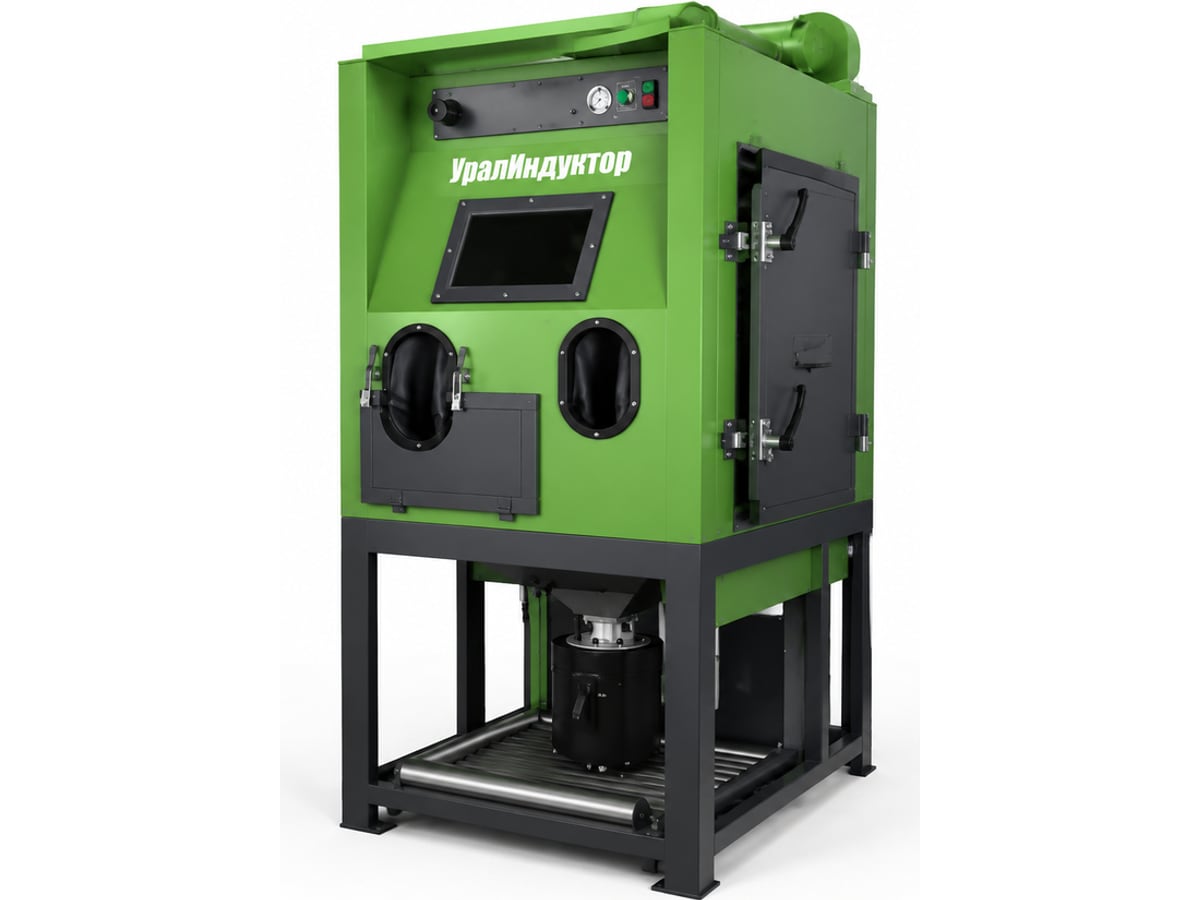
The operator operates the nozzle through the sleeves, a detail on the rotary table. Pedal control, cyclone separation and filter. Compact - for repair and small batches.

Suitable repair, restoration, single and non-standard parts

Fill in the questionnaire and the calculation will be more accurate

The part and its dimensions, contamination, required result, production program and compressed air. The sheet can be attached to the request below instead of a detailed description of the task.

Download the questionnaire (.docx)
Calculated for my task

Get a machine selection and a calculation for your part

The engineer will contact you during the working day, clarify the type of parts, program and surface requirements - will offer installation for your process.

  • Selection of the scheme: passing, pressure, trolley or cabin
  • Calculation of cost, timelines, supply scheme and leasing
  • Response within one working day

Calculated for my task

Technical specification or equipment passport PDF, DOC, XLS, JPG or PNG, up to 10 MB
Installation Formats

From a manual booth to a pass-through line

We select the format for the part size, production program and surface requirements.

Passing Conveyors

Crawler, tape or roller conveyor. Continuous processing of serial flat, profile and long-length parts.

Pressing with a rotating table

Index or single table, swinging nozzles. Handling parts from all sides without constant operator involvement.

Trolley Pressure

Turntable on the truck, carrying capacity up to 1000 kg. Automatic and manual nozzles for heavy and large parts.

Manual pressure cabins

900 × 900 and 1200 × 1200 cock table, cyclone separation and filter. For operation and repair.

V-shaped belts and servo module

The V-shaped belt conveyor and servo movement of the nozzle module is a careful supply of parts with a mass of 200–300 kg.

Special installations

Under the cutting tool and for cleaning molds of large tires - with individual equipment and multi-axis nozzles.

Engineering and service with 2014 year

Full cycle under single responsibility — from selection to servicing

UralInduktor is an engineering company: selection, supply, supervision and service under one responsibility. Delivery and service support in Kazakhstan.

01

We select

The engineer calculates the installation under the type of part, program, required roughness and site conditions. We do not sell a catalog - we collect a solution for the task.

02

We complete and supply

We supply an installation with abrasive recovery and dust filtration system. Entrance control and acceptance by our engineers. ZIP and spare parts - under the order.

03

Installation and maintenance

Maintenance, commissioning, training of operators. Warranty 12 months. Service, repair, modernization - for the entire service life.

Warranty 12 months
For supplied equipment and commissioning
Warehouse ZIP in Kazakhstan
Nozzles, filter sleeves and abrasives - in days, not in months
Documents for audit
Passports, certificates, instructions - pass checks
Our Process

From request to start-up — transparent and in stages

Payment in stages or through leasing from a 0 % advance.

1-3 day

Application and terms of reference

The engineer will specify the type of parts, the program, the required roughness and budget. Only engineering analysis of the task.

1–3 weeks

Selection and commercial offer

KP with specification. We select the installation for your details, flow and site conditions.

Time for the task

Manufacture and supply

Production under control, delivery in Kazakhstan. Payment in stages under the contract.

3–6 weeks

Installation, start-up, training

Our team mounts and runs the installation, configures modes, trains operators and transfers technology.

How to read УИП designations

УИП — UralInduktor's own system of commercial designations for pneumatic sandblasting and abrasive blasting equipment. The code helps to distinguish the design family, the main working dimension, the stations and the number of nozzles. The technical abrasive feed scheme is specified separately according to the actual catalog version and the agreed specification.

Code elementMeaningWhat it means for the customer
УИПUralInduktor · sandblasting machineunified series of pneumatic abrasive equipment
А / Рautomatic / manualhow the working cycle is performed
КЛ / КР / ПС / ТС / КМbelt or roller conveyor; rotary table; cart; chambermain design layout
Numeric partkey working dimension, stations and number of nozzlesthe exact meaning is explained on the model card
Example УИП-АКЛ-960-15И — an automatic pass-through machine with an effective entry width of 960 mm and 15 nozzles. The feed type, nozzle diameters and their operating algorithm are confirmed by the specification.

Task first, then equipment

Determine the material and dimensions of the part, its weight, the loading method and safe positioning.

Describe the contamination: corrosion, scale, paint, carbon deposits, process deposits or a requirement for matting.

Define the result criterion: a visual reference standard, degree of preparation, roughness range or coating condition.

State the required output and operating mode, not just the size of the largest part.

Check the availability of electric power, compressed air, ventilation, floor, openings and the loading route.

Select the abrasive, nozzles, return and dust extraction as a single process system.

If there is a risk of damaging the part, perform a trial treatment and record the control parameters.

Pressure and injector configuration

SchemePractical meaningWhat to check
Pressure-typeThe abrasive is metered from a pressure vessel into the air stream. Intensity and productivity are usually higher.The air consumption is calculated from the nozzle and pressure; the fittings, remote stop and tightness are checked.
Injector-typeThe abrasive is drawn in by vacuum in the gun. The scheme is simpler for delicate and occasional work.Lower intensity; sensitive to the length and setup of the suction line.
For this range The letter suffix is part of the commercial designation УИП and is not used on its own to determine the feed scheme. A pressure-type or injector-type system is specified in the description of the specific version and confirmed by the specification before ordering.

Cleanliness grade and roughness

The required degree of cleaning and surface profile are agreed for the specific part and the subsequent operation. For steel surfaces, grades Sa 2, Sa 2½ or Sa 3 may be used under the applicable visual assessment method. The roughness profile depends on the abrasive, fraction, pressure, angle, distance and exposure time. A specific grade or range is included in the proposal only after the initial condition and the process have been checked.

  1. a surface reference standard or photo does not replace the agreed inspection method
  2. edges, welds, pockets and shadow zones are assessed separately
  3. a coating applied after cleaning has its own requirements for profile and cleanliness
  4. a trial treatment records the abrasive, fraction, pressure, distance, time and result

Abrasive: not just sand

MaterialTypical tasksLimitations
Steel shot / steel gritIntensive cleaning of steel, closed cycleDo not use where iron transfer is unacceptable; a compatible return system is required.
Copper slagCoarse cleaning, more often open or single-/few-pass workDustiness and reuse are assessed per process; do not consider it universal for blast booths.
GarnetPreparation for coating, non-metallic grainCheck the grain size distribution, purity and the economics of reuse.
Fused aluminaIntensive cleaning and profile creationHigh wear of nozzles and lining; take care with edges.
Glass beadsGentle matting and satin finishingNot intended for rapid removal of heavy scale.
Ceramic beadsConsistent finish, delicate partsHigher cost; efficiency depends on a well-developed recovery system.

UralInduktor can select and supply the abrasive together with the machine or separately. The grade, grit size, initial charge and working stock are determined after calculation or testing. Ordinary quartz sand should not be assigned automatically simply because of the familiar name of the equipment: dust risk, nozzle life, recyclability and surface requirements are taken into account.

Confirmed compatibility by model family

For automatic machines, the supplier has confirmed the use of steel shot and steel grit, fused alumina, and glass and ceramic beads. Plastic and walnut shell are considered for precision or specially prepared versions with suitable filtration, separation and recovery systems.

For manual pressure machines with cyclone separation — УИП-АТС-1100-1Н, УИП-РКМ-900-1Н and УИП-РТСЦ-1200-1Н — light non-metallic abrasives are recommended in the basic configuration. Steel shot and steel grit are not specified without separate confirmation and a change of configuration.

With ultra-fine corundum, the air separation is adjusted; for glass and ceramic beads, the air velocity and filter condition are checked; for plastic and nut shell, special separation/filtration elements and recovery adjustment are provided.

Abrasive return and dust extraction

A closed loop does not mean that 100% of the material is returned to work indefinitely. The grain breaks down, becomes contaminated and is carried away with the parts; dust and fines must be separated. Depending on the model, the circuit may include a hopper, screw conveyor, bucket elevator, vibrating screen, cyclone and air separator. The composition of the recovery system depends on the machine configuration.

  1. dust extraction may be built-in or separate
  2. filters — cartridge or bag type, with manual or pulse cleaning
  3. extraction capacity is selected according to chamber volume, openings, number of nozzles, dust load and required negative pressure
  4. the residual dust concentration in the cleaned air is confirmed for the selected filter and process conditions; emission requirements are set by the project documentation
  5. the recovery system and filter must be accessible for inspection, dust discharge and element replacement

Compressed air and site preparation

Compressor — a separate system The compressed air source is not considered part of the machine unless it is expressly included in the commercial proposal. Basic working pressure at the inlet — 6–7 bar. A stable supply and dry, clean air without visible condensate and oil are required. The flow rate, supply line diameter, receiver, dryer and filters are calculated from the number and diameter of simultaneously operating nozzles and the loading mode.
  1. three-phase power supply of the required capacity, protective devices and reliable grounding
  2. conditioned compressed air with confirmed pressure and flow rate, free of liquid moisture and oil
  3. room ventilation and safe discharge of the cleaned air per the project documentation
  4. a level floor with the permissible load, space for maintenance, filter replacement and dust removal
  5. openings, the unloading route and the working area of lifting equipment

Security

The supplier has confirmed the basic functions of the family: stop when the door is opened, overload protection and emergency stop. Their actual implementation is checked against the electrical diagram and the FAT of the specific machine.

Options may include an antistatic version, a wet dust collector for automatic machines, an explosion relief device and extended interlocks. Explosion-proof electrics and a complete system for combustible dust are a special version under a separate project.

A wet dust collector, grounding or an explosion relief panel is not a guarantee of safety on its own. The dust properties, a risk assessment, compatibility of the material with water, safe discharge/containment and the applicable supply documents are required.

ScenarioMinimum to be provided
Enclosed manual cabinetDoor interlock, intact gloves and window, pedal/remote stop, grounding, working dust extraction.
Automatic chamberGuards, interlocks on doors and loading zones, emergency stop, safe access for maintenance, securing of the part.
Operator-occupied or open blastingRemote stop device, protective suit and helmet, suitable breathing air, communication, lighting, fencing of the area and calculated ventilation.
Any configurationInspection of hoses and couplings, protection from static electricity, cleaning up spilled abrasive, training and compliance with the machine passport.
Configuration and protective equipment Interlocks, emergency stop and other protective devices are selected according to the machine design and the risk assessment. The composition of the automation, controls and supplied PPE is recorded separately in the specification.

What is included in the supply and what is calculated separately

SectionContentsHow it is recorded
Base equipmentChamber, abrasive feed system and nozzle system, movement mechanisms, recovery, dust extraction and control — only in the composition expressly stated in the specification.Commercial proposal
OptionsCompressor, receiver, dryer, filters, PPE, loading devices, robotization, spare nozzles and hoses.Separate line items
ServicesLayout, construction brief, installation, commissioning, training, testing, integration with the line.Separate contractual scope
Civil worksFoundation, floor, openings, ventilation, supply lines, power supply and lifting arrangement.After the survey and the contract

Price and ordering of sandblasting equipment

The price of an industrial sandblasting machine is calculated for the specific part and the required output. The cost is affected by the chamber dimensions, the number and diameter of nozzles, the pressure or injector design, conveying and tooling, abrasive recovery, dust extraction, automation and the scope of work on site. The commercial proposal shows the basic configuration, options, delivery, installation and commissioning separately.

How to order a calculation Send a drawing or photos of the part, the material, dimensions and weight, type of contamination, expected result, planned output and compressed air data. The engineer's first contact — as a rule, within one working day; the time needed to prepare a full solution depends on the sufficiency of the initial data and the need for testing.

Commissioning and service

UralInduktor performs equipment selection and layout coordination, organizes installation and commissioning within the contract scope, and provides operator training, diagnostics, repair, modernization and the supply of consumable components. The scope of service is determined by the machine design, operating mode and site conditions.

Before supply — checking the part drawing, productivity and the resources of the work area.

Before commissioning — readiness of power, air, dust extraction/ventilation, floor and safe zones.

During commissioning — checking the mechanics, interlocks, pressure under load, recovery, filter and the result on a test part.

After start-up — handover of operating modes, training and a list of scheduled maintenance.

In operation — diagnostics, repair, modernization, selection of nozzles, hoses, filters and other wearing components.

Maintenance schedule

Typical checks include the following actions:

  1. drain condensate and monitor the operation of the moisture separator
  2. inspect hoses, couplings, grounding and nozzles, track the increase in nozzle diameter
  3. clean or replace filter elements, empty the dust collector
  4. check the abrasive recovery, elevator, screw conveyors, separator and screen, if they are included in the version
  5. check the door interlocks, emergency stop and remote control of the abrasive feed

Supplier's starting criteria

The nozzle is inspected daily and measured weekly; the replacement criterion — an increase in bore of 15% or more, as well as a crack, deformation, blockage or an unstable jet. Hoses are checked daily, protective glass — before work, seals — monthly.

Filter elements are inspected weekly and assessed monthly; the supplier states 3–6 months for normal and 1–3 months for heavy dust load only as a typical guideline. The final intervals and criteria are determined from the passport, the actual pressure drop and the air flow rate.

Frequency Per-shift, weekly and scheduled intervals are taken from the passport of the actual machine and adjusted for the abrasive, load and operating hours. The list above helps to plan maintenance but does not replace the passport.

What makes up the cost of ownership

  1. electricity for the machine itself and, separately, for the compressor station
  2. compressed air consumption at the actual nozzle diameter
  3. initial charge, carry-over, breakdown and reusability of the abrasive
  4. wear of nozzles, hoses, lining, gloves, protective glass and seals
  5. cleaning or replacement of filters, disposal of dust and spent abrasive
  6. operator labor, loading/unloading and changeover time

The exact hourly cost is calculated for the part and the mode. Abrasive consumption depends on the material, the processing mode and the efficiency of recovery; it is determined by calculation or trial processing.

Delivery time, warranty and documentation

All machines are designed and configured to order. Manufacturing lead time — from 30 calendar days after the technical specification and configuration are agreed; the exact time is stated in the commercial proposal and fixed by the contract.

Warranty for the agreed configuration — 12 months. Nozzles, hoses, protective glass, seals, filter elements and other parts subject to normal wear are not covered by warranty repair unless the defect is related to a confirmed manufacturing defect.

A Russian-language passport and manual, electrical and pneumatic diagrams and a list of the main components, within the scope provided for by the contract, are supplied with the machine. The layout and the briefs for the foundation and construction preparation are issued after the contract is concluded and the version is fixed. Design and execution of the civil part, installation and commissioning — separate contractual scopes.

Detailed engineering guides for the customer

So that the customer can check the initial data before contacting an engineer, five separate materials have been prepared for the section. They cover practical questions without transferring the characteristics of another manufacturer's model to УИП equipment.

1) How to select a compressor: flow rate by nozzles, allowance for wear, supply line and air preparation.

2) How pressure and injector systems differ and which tasks each one suits.

3) How the elevator, cyclone and separator work and how to maintain the working abrasive mix.

4) How dust extraction is selected and when a special version is required for fire- and explosion-hazardous dust.

5) How to organize maintenance, FAT factory tests and site preparation for commissioning.

Does the pressure tank volume determine the compressor size?

No. With the same nozzle and pressure, air consumption is practically independent of whether a 100 or 200 liter tank is installed. The volume mainly affects the abrasive reserve and the interval between loadings.

Can aluminum be processed in a standard machine?

Not without checking. First the material, the coating and the properties of the resulting dust are assessed. If a fire- or explosion-hazardous mixture may form, a separate technical specification and a special version are required; the standard configuration is not considered suitable automatically.

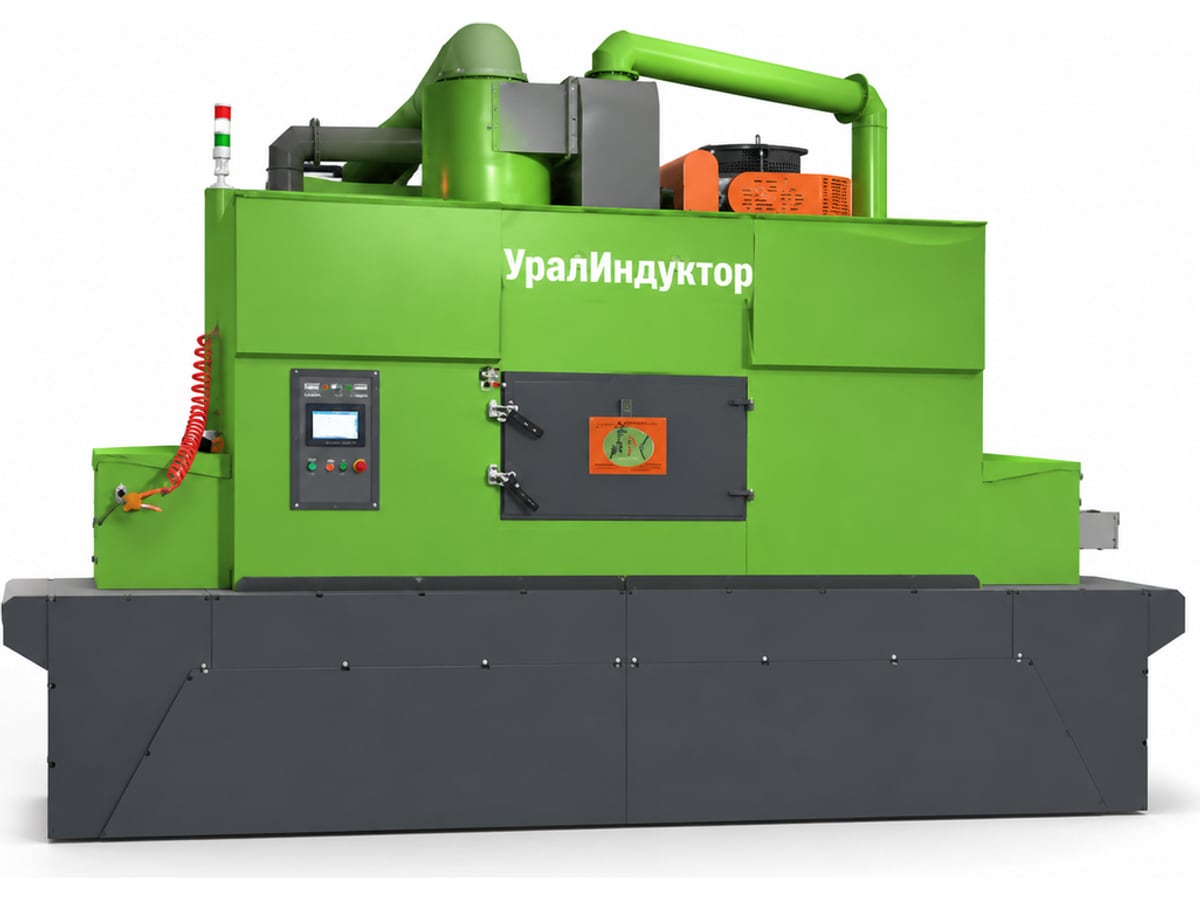
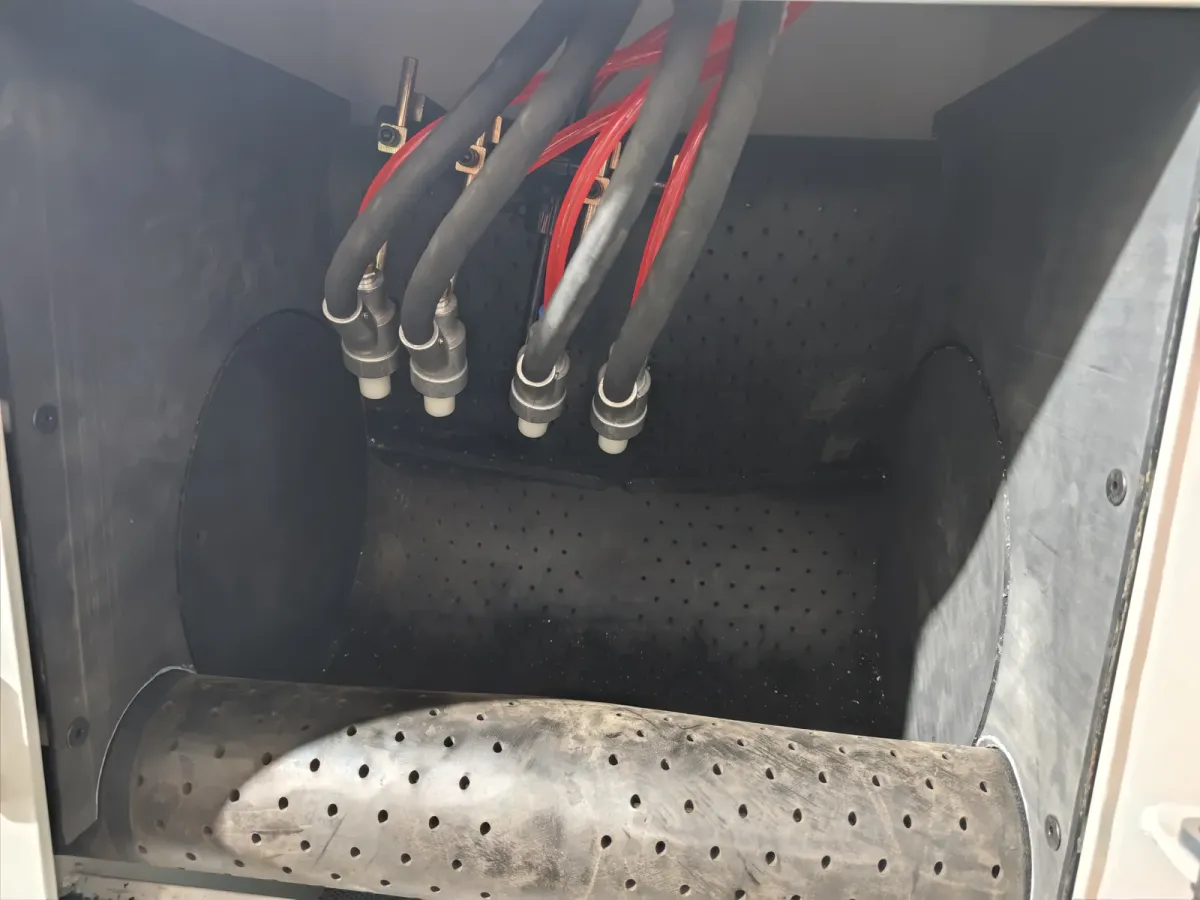
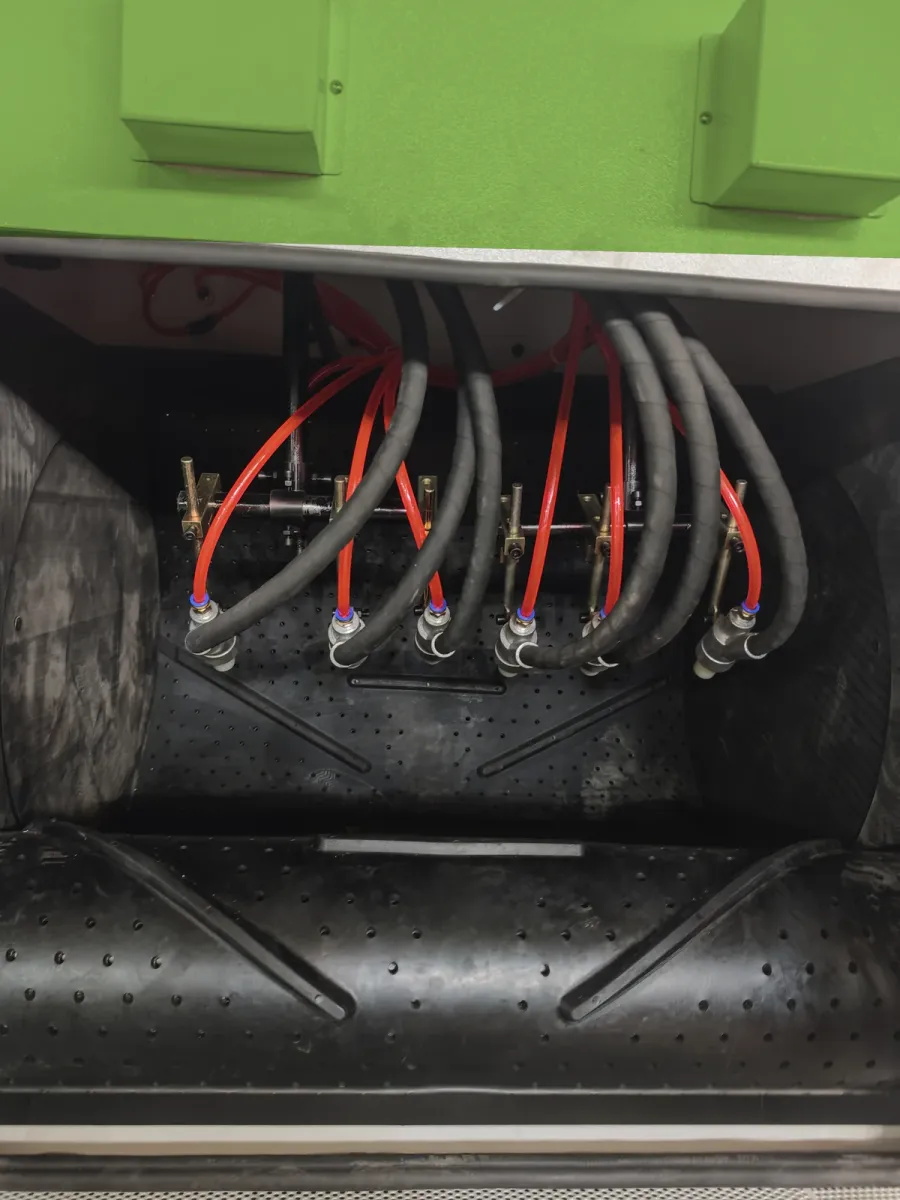
Units and working chambers

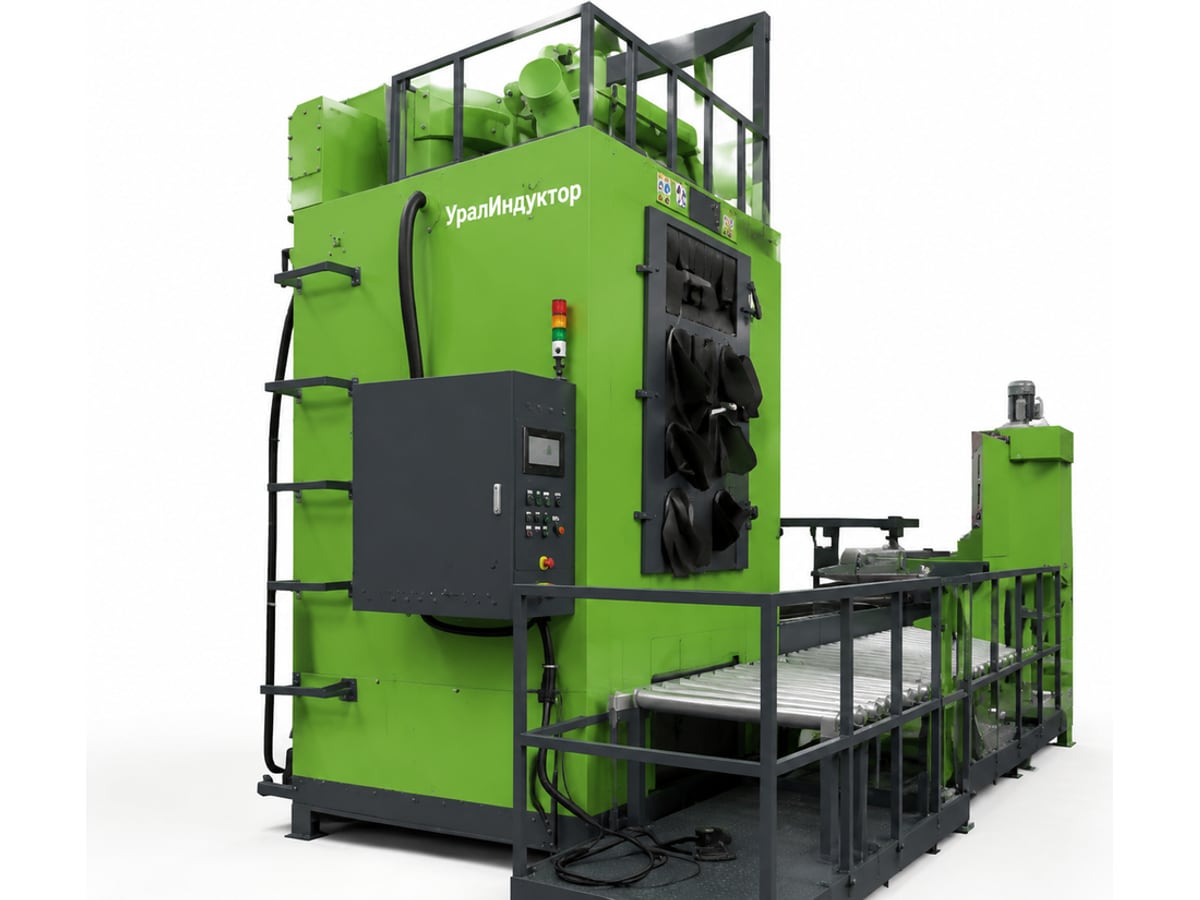
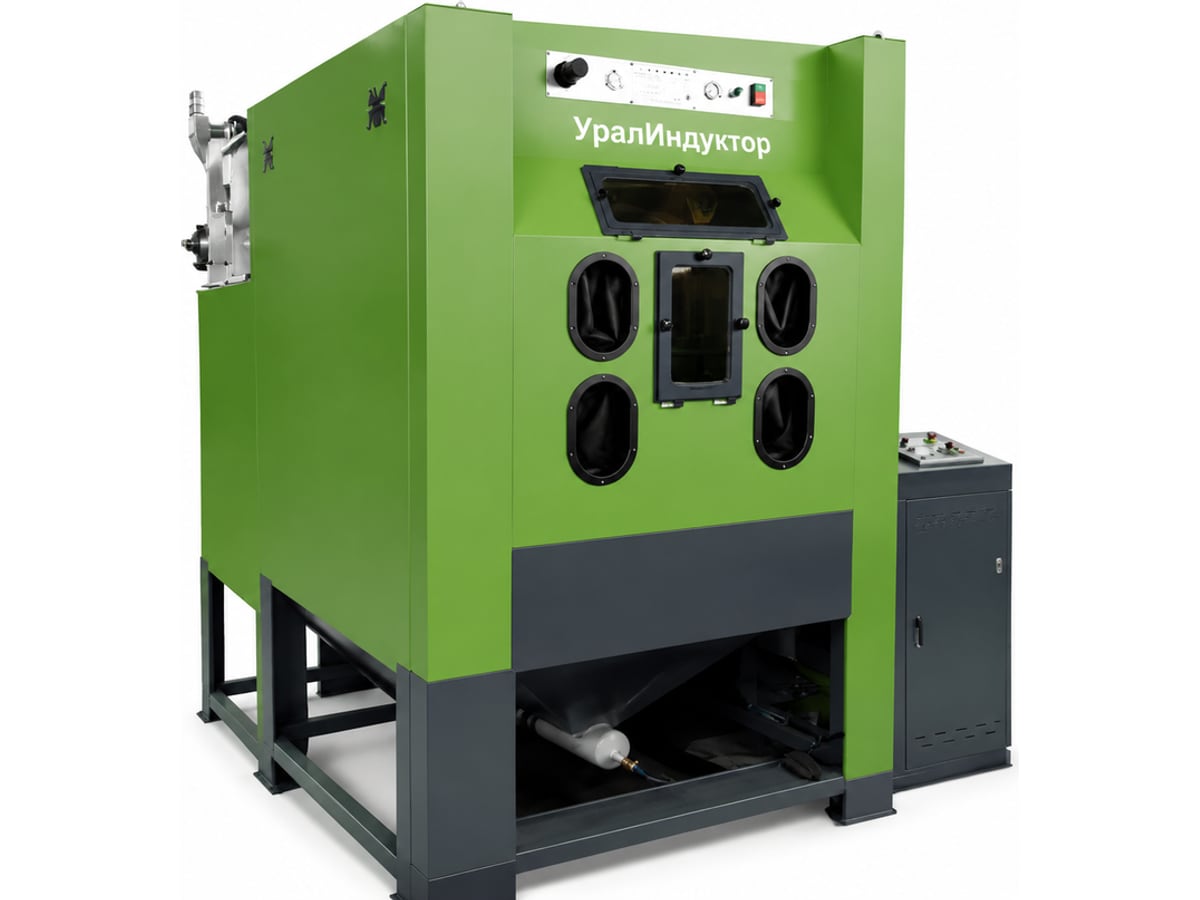
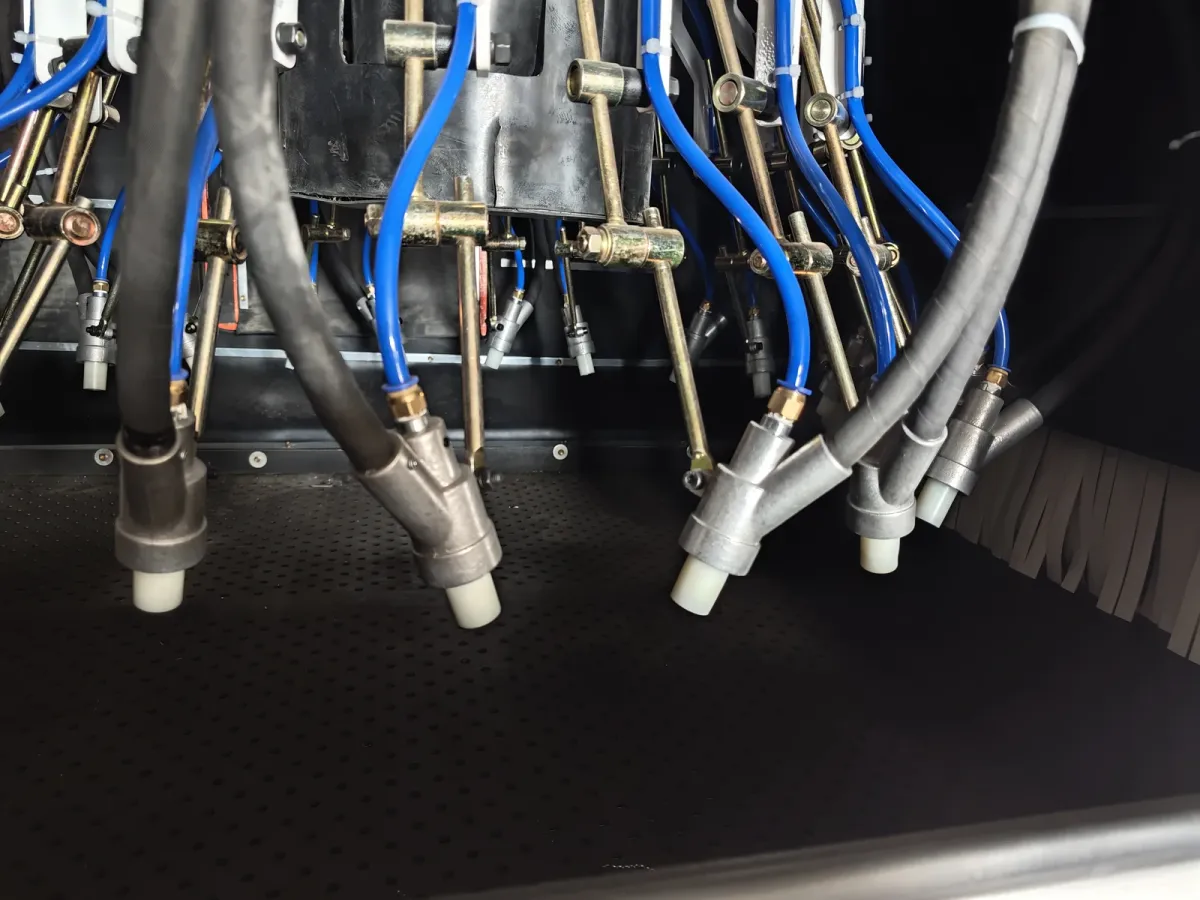
Photos from production and acceptance testing: working chambers, nozzle groups, rotary tables. The configuration of each machine is determined by the order specification.

Frequently Asked Questions

Answers to the key questions

If you do not find the answer - call, the engineer will deal with your situation personally.

How is sandblasting different from shot blasting?

During sand blasting, the abrasive is accelerated by a stream of compressed air (pressure or injection circuitry) and directed by nozzles - convenient for complex geometry, point and manual processing. When shot blasting, the abrasive (steel shot) is thrown by mechanical turbines - higher performance on large flat streams. Often in the same factory, both methods are used for different parts.

Which installation to choose for my details?

For the serial flow of flat and profile parts - pass conveyor. For details of complex shape - pressure with a rotary table. For heavy and large - carts. For piecework and repairing - manual cabins. Send the type of part and the program - the engineer will select the scheme.

What happens to the abrasive after treatment?

The abrasive is collected at the bottom of the chamber, passes through the grid, the elevator and the separator - dust and large inclusions are separated, a suitable abrasive is returned to the working bunker. The closed turn reduces material consumption, dust is captured by the filter unit.

Is it possible to process not only metal?

Yeah. Pass and pressure installations are suitable for metal, aluminum profiles, glass, stone and similar materials - the mode and abrasive are selected for the material and the required roughness.

Do you make installations for our dimensions and task?

Yeah. chamber, transporter, number and scheme of nozzles, rotary table and tooling adapt to the size of the product and program. There are special versions - for cutting tools and for cleaning molds of large tires.

What is the warranty, and is leasing available?

Warranty of 12 months, installation supervision and commissioning by our team, operator training. Leasing is available through partner leasing companies.

Can a machine be selected only by the part size?

No. The weight, geometry, accessibility of surfaces, contamination, required result, output and the resources of the work area are needed.

Why is there no fixed price?

The price depends on the chamber, the number and diameter of nozzles, recovery, dust extraction, automation, loading and the scope of work. The proposal shows the base, options, delivery and commissioning separately.

What is the productivity of the machine?

It is calculated for the specific part. Processing time depends on the area, contamination, blast jet, pressure, abrasive and loading method.

Can one abrasive be used for all parts?

Usually not. An abrasive that is safe for one surface may contaminate or damage another. It is better to separate the range of parts.

Is there a fully closed abrasive circulation?

Recovery can be closed in its design, but some of the grain breaks down and is removed as dust, and some is carried away on the part. Replenishment is required.

What compressor is needed?

First, the consumption of all simultaneously operating nozzles at working pressure is summed. For the preliminary selection of a compressor, the consumption of new pressure nozzles is calculated with a 50% allowance for normal wear and losses in the line. This allowance is not added again if wear and losses have already been taken into account. The final value is refined according to the agreed layout, and the compressor is checked against the actual free air delivery at the required pressure.

Can Sa 2½ be achieved?

Such a target can be set for a suitable surface, but the commitment is fixed after checking the initial condition, the selected abrasive and the inspection method.

What should be sent for selection?

A photo or drawing of the part, the material, dimensions and weight, type of contamination, desired result, output, available power supply and compressed air.

Do you carry out installation and commissioning?

Yes, if the work is included in the contract. Construction preparation and utilities are agreed separately.

When can trial processing be carried out?

If the task is sensitive to the quality of the part or to damage to it, and it is technically possible to obtain a sample, the test is agreed before the mode is finally fixed.

What counts as consumable parts?

Nozzles, hoses, protective glass, gloves, seals, filters and the lining of the working zones. Their service life depends on the abrasive and the mode.

How quickly will an engineer respond?

First contact — as a rule, within one working day. The time for a full technical solution depends on the completeness of the initial data and the need for testing. Get a technical solution and cost calculation Send a photo or drawing of the part, the material, contamination, the required result and the planned output. An engineer will, as a rule, contact you within one working day, clarify the initial data and propose the next step for the abrasive blasting area. The full calculation is performed after a sufficient technical specification is received.

In touch with you

Let's discuss your task

  • Main contact number+7 (775) 853-40-95Sales department and engineering centre
  • Emailstasgross.ru@gmail.comResponse during the working day
  • Main office addressAstana, Saryarka district, Radisson hotel, office 4
  • Office hoursMon–Fri, 9:00–18:00GMT+5 (Astana)
Compare offers

We'll prepare the best proposal

Send us a commercial proposal from another company for a sandblasting machine — we will calculate a more favorable price taking into account our service base and spare parts kit warehouse in Kazakhstan.