
Foundry Equipment
Ladles for modifying cast iron
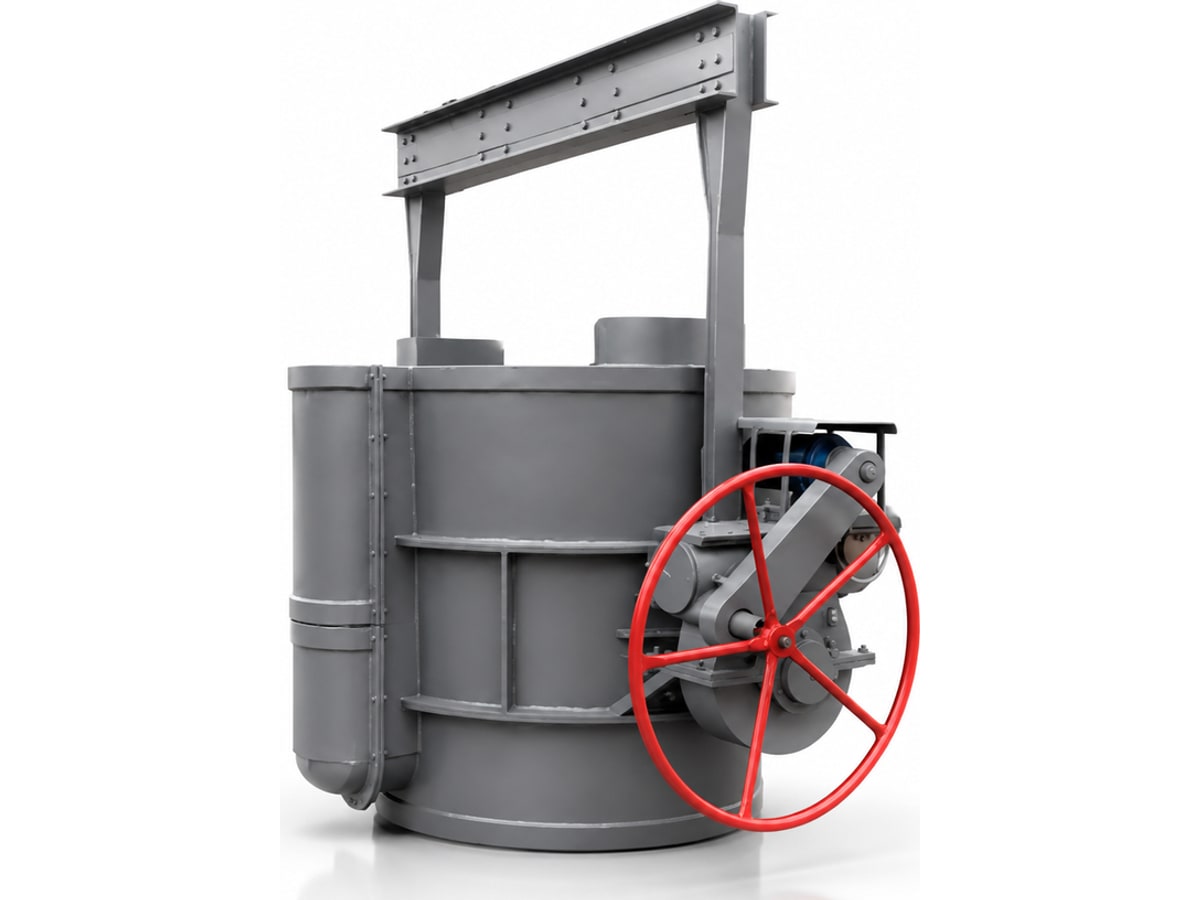
Ladles for cast iron modification are designed for out-of-furnace treatment of the melt, including the production of high-strength cast iron with spheroidal graphite (ductile iron). The elongated body makes it possible to form a deep working bath and leave space for the reaction. The series includes 11 sizes from 0,3 to 10 t.
We will call back within 10 minutes
Quick estimate and consultation
An engineer will select a model for your metal and send a cost estimate.
Manufacturing lead time — from 30 days
We make ladles to order. We confirm the availability of the selected size as of the date of the request.
6-month warranty on the gearbox
Warranty on the gearbox of the tilting mechanism. Lining and consumable units are not included.
Shipment across Kazakhstan and the CIS, customer pickup
Shipment from the warehouse. Delivery by road and by rail.
Questionnaire
Send us the alloy, the metal weight and the pouring method — we will prepare a proposal with the price and lead time.
Fill in the questionnaire →model range
11 models
from 0,3 to 10 t
Capacity
from 0,3 up to 10 t
under any volume of a single spill
Astana
100 %
service and ZIP — from a warehouse in Kazakhstan
warranty
6 months
on the gearbox of the tilting mechanism
Catalogue
Model range
13 models in the series. Pick up on the capacity and dimensions. Service and ZIP - under your object.
Design and dimension designations


Capacity in the tables is the mass of metal, dimensions are in millimeters. The designations refer to the diagram of this series: Φ1 — inner diameter at the top, Φ2 — diameter at the bottom, H — body height, A and B — overall dimensions of the assembled ladle.
The diagram shows the principle of dimensioning and does not replace the working drawing. The working fill and the final dimensions depend on the lining thickness and the freeboard — when agreeing on the order, request the drawing of the selected version.
What the modification ladle is used for
Unlike an ordinary pouring ladle, it is needed not only to hold and move the melt. Conditions for treating the cast iron with additives are created in its working cavity. In ductile iron production, spheroidizing treatment with a magnesium-containing material promotes the formation of spheroidal graphite.
When ordering, it is important to name the process itself. Spheroidizing treatment and graphitizing modification are not the same operation. They solve different metallurgical tasks, so the wording «ladle for modification» is not enough to choose the internal design.
Why the body is made elongated
The elongated shape is needed to create a deeper metal bath above the reaction zone. Together with a properly chosen working fill level, it helps create conditions for the modifier to be absorbed. A freeboard is left above the melt — space for the reaction to take place, not additional usable capacity.
The geometry is assessed after lining. The outer height of the body is not equal to the depth of the metal, and the diameter given in the table does not describe the entire reaction cavity. Dimensions and working weight are agreed with the process engineer: the required proportions depend on the treatment method and the constraints of the site.
How the sandwich process works
In one common variant, the magnesium-containing material is placed in a prepared pocket at the bottom and covered with a covering material. Its task is to delay the onset of intense interaction until a layer of liquid cast iron has formed above the additive. Therefore, not only the shape of the body matters, but also the design of the pocket and the lining.
A version for the sandwich process is agreed to suit the technology adopted at the plant. The presence of the required pocket, partition or lid cannot be determined from a photograph alone. This is a description of the principle, not instructions for carrying out the treatment: the composition of additives, the dosage and the mode are set by the plant's process documentation.
How modifier consumption can be reduced
The purpose of a special ladle is to ensure more efficient use of the additive while achieving the required treatment result. If the design and the mode help to improve magnesium recovery, it becomes possible to reduce the consumption of the expensive modifier per tonne of treated cast iron. But savings do not appear automatically just because of the elongated shape.
The assessment requires the composition of the initial cast iron, the characteristics of the modifier, the metal temperature and the treatment results. Actual savings are determined by comparing consumption when the required quality of cast iron is achieved. The consumption rate is confirmed at a specific plant, not assigned only by the ladle dimensions.
What to consider when choosing capacity and version
Nominal capacity is the starting point of selection, not an instruction to fill the body to the brim. For a reaction ladle, it is especially important to agree on the weight of the batch being treated, the refractory cavity and the freeboard. Then the total assembled weight and the parameters of the lifting equipment are checked.
The elongated body must fit in the filling and handling area. Information will be needed on the furnace spout height, the crane hook, access to the reaction zone and the maintenance area. If a lid is needed, its purpose, opening and mating with the site equipment are additionally agreed.
The ladle is supplied without lining, with a passport. Before manufacturing a custom version, we agree on the drawing, overall dimensions and suspension. For initial selection, a description of the process and any available photos or documents are enough: we will clarify the missing dimensions. Price — on request, made-to-order supply — from 30 days.
What to specify for selection
- Cast iron grade, purpose of treatment and the modifier used.
- Addition method and weight of metal per cycle.
- Requirements for the reaction zone, cover and gas removal.
- Lining, suspension, height restrictions and the layout of subsequent pouring.
Supply and warranty
We supply ladles without lining, with a technical passport. For a first inquiry, the data you already have is enough: a description of the task, photos or documents. We prepare a proposal for a standard ladle within one day if the initial data is sufficient.
Supply to order — from 30 days. For a non-standard design, we agree on the drawing, dimensions and suspension. Before shipment we check completeness, dimensions and the operation of the tilting mechanism; on request we provide a photo or video.
The gearbox warranty is 6 months; the other units are not covered. Warranty terms and spare parts.
Frequently Asked Questions
Questions before ordering
If you did not find an answer — call us, and an engineer will review your task.
Why can't such a ladle be replaced with an ordinary cast iron ladle?
The main task of the transport-and-pouring series is moving and pouring. For treatment with additives, the internal geometry, reaction zone, working weight and freeboard must be agreed separately. A match in capacity is not enough.
Is every model already ready for the sandwich process?
No. Applicability depends on the agreed internal design and the process. The pocket for the additive, the covering material, the lining and the working fill level are determined for a specific process; the ladle is supplied without lining.
Does the elongated shape guarantee lower modifier consumption?
No. It helps organize the working bath, but consumption depends on the entire process and the initial metal. A possible reduction of the consumption rate is confirmed by the treatment results.
Can a ladle be ordered for an existing process?
Yes. Send a description of the treatment, the cast iron grade, modifier data, the batch weight and the site constraints. Based on this data, we will agree on the design, lining geometry and suspension.
Applications
For your metal and pouring mode
We select the capacity, type of drain and lining composition for a specific alloy, seriality and casting technology.
Steel
up to 1 600 °C
- LiningPrimary or Neutral
- ApplicationsMNLZ, serial filling
Cast iron
up to 1 450 °C
- Liningsour, resource 100+ fins
- Alloysgrey, malleable, HF
Colored alloys
up to 1 200 °C
- Lininggraphite or alumina
- Alloyscopper, brass, bronze
Refinements
under individual order
- Drainstop / kettle / bottom
- Traverstilt drive, hydraulics
Complete cycle
One supplier — from project to service
We select a ladle for your melting furnace, manufacture, deliver, train operators and stay on the service. Replacing lining is our strength.
- 01
Selection and estimate
- 02
Design for the site
- 03
Manufacturing
- 04
Delivery to site
- 06
Training and Lining
- 07
Service and replacement lining
One contract, one point of responsibility. From the first calculation to the replacement of lining on the site - all stages are carried out by our engineers for your facility.
Request a turnkey calculation →Selection and estimate
Get an equipment selection or a project calculation — fill in the form
An engineer will contact you, clarify the task and suggest a solution for your production process.
- Equipment selection for your metal, operating mode and output
- Cost, lead time and delivery arrangements
- Response within one working day
Why us
Why customers choose UralInduktor
A manufacturer with a complete engineering cycle: equipment selection, commissioning and service within one company.
01
Manufacturer in key product areas
We manufacture induction melting furnaces and heaters, shot blasting equipment, cooling systems and steel casting ladles, taking responsibility as the manufacturer.
02
Complete engineering cycle
Selection, design, delivery, installation, commissioning, training and service within one company.
03
Broad product portfolio
We address most metallurgical and foundry production requirements, from an individual furnace to a turnkey production area.
04
Practical technical experience
Operating since 2014. Completed projects of varying complexity and engineers with practical commissioning experience.
05
Fast supply of stock items
Some equipment is available from stock, reducing lead times for urgent requirements.
06
Warranty and support
6-month warranty on our own production. Post-warranty maintenance, spare parts and service — on an ongoing basis.
In touch with you
Let's discuss your task
- Main contact number+7 (775) 853-40-95
- Main office addressAstana, Saryarka district, Radisson hotel, office 4
- Office hoursMon–Fri, 9:00–18:00
Comparison of proposals
We'll compare commercial proposals
and offer our own option.
Send us another company's proposal — we will compare the equipment list, configuration and cost.